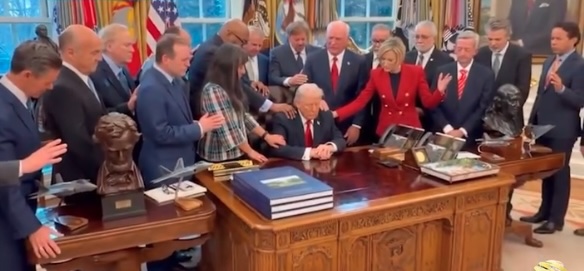
(The photo shows Trump being prayed over in the White House yesterday by a group of evangelical pastors.)
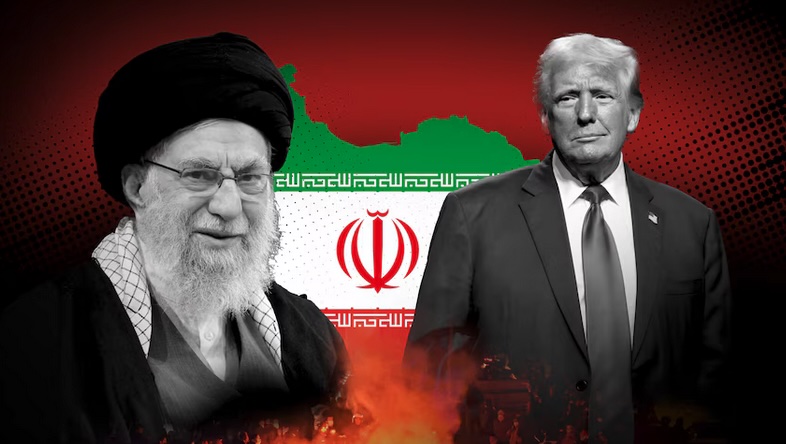
Today is Day 7 of this mass-murdering, mass-destruction project that Pres. Donald Trump named “Operation Epic Fury” (OEF). Already, the dimensions of many of its (quite foreseeable, and by many people clearly foreseen) consequences are becoming evident.
Most crucially, as of today, these:
The Iranians’ governance and command structure has survived, despite “decapitation” strikes since its first hours that killed Supreme Leader Khamene’i and dozens of top commanders.
Iranian forces continue, in response to OEF, to undertake stand-off attacks that seem well aimed and well coordinated and have in many cases inflicted real damage on their intended (military and economic) targets.
Israel has exploited this situation of war, impunity, and lawlessness to (a) reimpose its super-tight siege on the two million people of Gaza, (b) sharply escalate its bombings of Lebanon and peremptorily order the ethnic cleansing of South Lebanon as well as Beirut’s densely populated southern suburbs, and (c) continue to oppress and dispossess Indigenous inhabitants of both the West Bank and Syria.
The Iranians’ response to OEF has included attacks not just on Israeli and U.S. military bases across West Asia but also on key economic facilities in Arab Gulf countries.
Through those latter attacks and by closing the Straits of Hormuz to shipping from OEF-associated countries, Tehran has delivered a huge blow to the global economy and especially to the Gulf Arab states that have been major bankrollers of Trumpian projects worldwide.
There are still, as of now, no signs of any imminent collapse of Iran’s command/governance structure. And meanwhile, all around the world a chorus of questions is growing louder around two key issues, either of which could rapidly increase the pressure on Washington to end the war. The first such pressure-point is the durability of U.S. stockpiles of key missile-defense and air-defense munitions needed to fend off Iran’s continuing volleys of low-cost drones and high-altitude missiles. The second is the degree, speed and temporal extent of the damage that the war inflicts on the global economy– a process that has already started.
Most people in the United States and other Western nations seem to consider it “normal”, or anyway unremarkable, that the U.S. should, on its own, have the authority to control and police the nuclear-enrichment projects of another country far away.
It is not.
There are a number of high-level UN bodies, with the Security Council at their apex, that have that authority. In 2015, the United States, the other four veto-wielding permanent members of the Security Council, and Germany jointly negotiated an arrangement with Iran that sought to address concerns that some countries had had about Iran’s nuclear-enrichment program. The agreement they reached, the “JCPOA”, was immediately endorsed by the Security Council.
In 2018, Pres. Donald Trump unilaterally pulled out of the JCPOA and restored many of the unilateral U.S. economic sanctions on Iran that had earlier been lifted under its terms. The JCPOA’s other (non-Iran) signatories expressed mild concern at Trump’s move, but took no other action. (When Joe Biden became president he took some inconsequential steps to rejoin the agreement, then abandoned the project.)
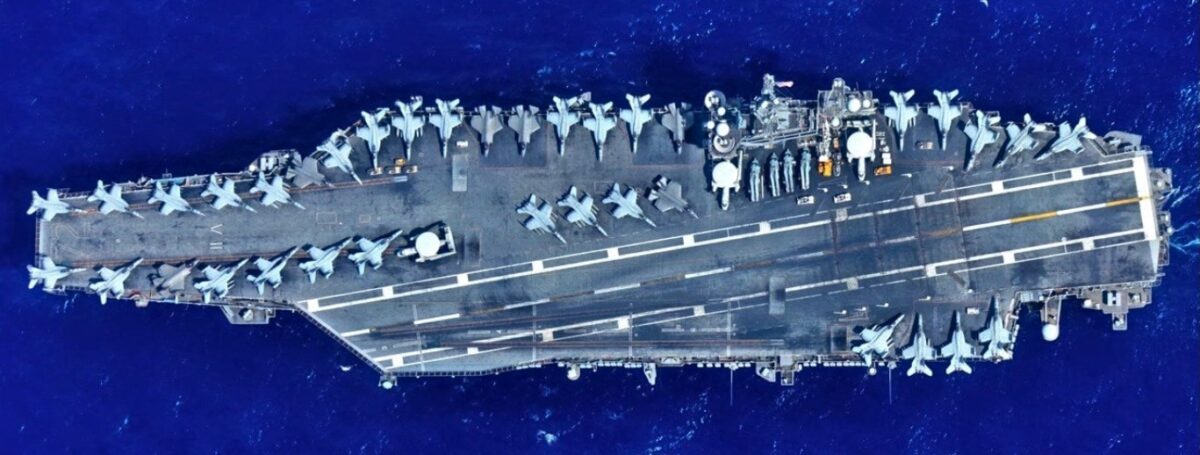
The Trump administration has now ordered a second Carrier Strike Group to join the one that is already sailing in the Gulf of Oman, close to Iran, and has deployed large amounts of military equipment (both offensive and defensive) to U.S. bases across West Asia, and to Israel. Trump’s envoys have now had two rounds of “proximity talks” with Iranian counterparts this month, discussing new limitations on Iran’s nuclear enrichment program.
Both sides have said those talks went fairly well. But Washington now expects Tehran to present more detailed plans by March 3 and Trump has warned that if Iran fails to reach a satisfactory agreement, then it will face very serious military consequences.
Some analysts have gauged the probability of an all-out war at “80 to 90 percent.” Such numbers are still wildly speculative (and personally I would peg them far lower than that.) But in assessing the possibility of any major military engagement between the U.S.-Israeli alliance and Iran it is crucial also to assess the range of outcomes and knock-on effects that we can plausibly foresee from any such conflict, at a number of different levels:
within the immediate theater of the conflict (Iran, the Gulf region)
in the Mashreq (Levant) region which has Israel at its geographic core, and specifically, on Israel’s ability to continue imposing its diktat on its neighbors in the region, and
on the stability and integrity of the global system as a whole.
In this essay, I shall review the record of the project to weaken or topple Iran’s current, 47-year-long system of governance that the Trumpists and the government of Israel have jointly pursued in the period since Trump’s victory in the 2024 election, and identify six key takeaways we can take from that review.
In a later essay, I plan to build on this analysis to provide a few preliminary guidelines for what the effects of any new Trump-Israel assault on Iran might be, at the three levels identified above.
U.S. Treasury Secretary Scott Bessent blurted out an important truth at the Davos conference, January 20. He described the way Washington has wielded the weapon of economic sanctions against Iran as “economic statecraft” crowing that:
It’s worked because in December, their economy collapsed. We saw a major bank go under. The central bank has started to print money. There is a dollar shortage. They are not able to get imports, and this is why the people took to the streets… Things are moving in a very positive way here.
Journalism prof Azadeh Moaveni gave a detailed account in this powerful piece in the Financial Times January 17, of how Bessent and the rest of Trump’s team had tightened the screws on the Iranian economy starting back last March:
There was Trump, on Tuesday, shouting all over the internet, “Iranian Patriots, KEEP PROTESTING – TAKE OVER YOUR INSTITUTIONS!!! … HELP IS ON ITS WAY. MIGA!!! PRESIDENT DONALD J. TRUMP.” And there was Trump just a day later saying, “We’ve been told that the killing in Iran is stopping — it’s stopped — it’s stopping… And there’s no plan for executions, or an execution, or execution — so I’ve been told that on good authority.”
He was racing backward from the incendiary regime-change rhetoric of the previous day.
This was– for now, anyway– a clear case of “TACO, Iran-style”, to borrow the FT’s great acronym for “Trump Always Chickens Out.” Read on to see where I think this leaves us all now. But first, a bit of essential background.
Back in late June, in the aftermath of the “12-day War” that the U.S.-Israeli axis launched jointly against Iran June 13, I made a number of judgments, and shared some of them here and here. In the first of those essays, I judged that the reason that war ended so (relatively) swiftly and cleanly was that by June 24-25 both Israel and Iran found themselves locked in a “mutually hurting stalemate.” It was most certainly not any kind of “cakewalk” for the U.S.-Israel axis, and it certainly did not result in the unassailable U.S. win that Pres. Trump hurried to present it as.
On July 1, Sina Toossi published an important piece in Foreign Policy mag in which he argued that the “12-day war” that the US-Israeli alliance launched against Iran on June 13 had backfired, primarily in terms of its nuclear-nonproliferation goals. He wrote:
There is no question that Israel achieved notable tactical successes, inflicting serious damage on Iran’s military command and scientific infrastructure. But … based on available evidence, Netanyahu’s core goals—undermining Iran’s deterrence and meaningfully rolling back the elements of its nuclear program that pose the greatest proliferation risk—remain unmet.
One of the most significant failures lies in the nuclear file…While Trump administration officials have insisted that the strikes set Iran’s program back by years, early U.S. and European intelligence assessments suggest otherwise.
On July 8, Israeli military/intel analyst Moty Kanias followed up with this analysis, along similar but notably broader lines. Here were his heading and subhead:
Very few people in the ‘West’ have yet paid much attention to the very significant contribution that China has made, behind the scenes, to strengthening Iran’s resilience as well as its defensive and offensive military capabilities.
Several Western reporters have written (e.g., Reuters here) about China’s heavy degree of reliance on oil imports from Iran, and many of them have noted that this has made China very vulnerable to any closure of the Straits of Hormuz that could have been sparked by a continuation of the US-Israel war on Iran. But very few Western commentators have taken note of the fact that on May 24, a lengthy freight train carrying electronics and other goods arrived in Tehran, having inaugurated the first ever direct rail link between China and Iran.
Establishing this direct rail link is not the only way in which China has been bolstering Iran’s resilience and capabilities. Of probably even greater importance has been the ability Chinese tech has given many core parts of Iran’s governance and military command systems to free themselves from reliance on the kinds of Western tech that have left users often fatally vulnerable to US-Israeli hacking. As the well-placed Chinese tech expert William Huonoted earlier today, “Iran’s drones… fly coordinated, autonomous, and lethal. That’s Chinese targeting AI and optical systems… Iranian missiles run on Chinese chips, Chinese servos, Chinese nav units.”
He noted that in return, “China gets a combat-proven proxy and real-time telemetry from a U.S.-backed target. If Iron Dome can’t keep up, what happens in Taiwan? What happens to Aegis? To Japan’s missile net? Everyone watching saw the same thing… “
Small surprise, therefore, that earlier today, per Al-Monitor, “China hosted defence ministers from Iran and Russia for a meeting in its eastern seaside city of Qingdao…”
Huo and others have noted that much of the terminal guidance that made Iran’s most advanced missiles, and some of its drones, so effective in reaching precise targets inside Israel, was provided by systems using China’s Beidou navigation system (intriguingly often shortened to ‘BDS’.) Unlike systems reliant on the Western GPS system, BeiDou is not vulnerable to US/Israeli hacking or spoofing.
Evidently, some leading people in Iran’s security sector were still, as of June 13, using Western-based communications systems like WhatsApp or Telegram. Earlier this week, a Washington Post reporter was passed, by “an Israeli individual who obtained the material” an audio recording of a threat that an Israeli security-services operative had delivered over the phone to a “senior Iranian official” warning that he and his wife and family would be murdered unless he either fled Iran or made and sent back to them within 12 hours a video in which he dissociated himself from the Iranian government.
Almost certainly, going forward, all senior Iranian officials will be restricted to using non-Western means of communication.
China’s ability to have started building valuable, concrete operational relations with many parts of the Iranian military should come as little surprise. Back in March 2023, Chinese Foreign Minister Wang Yi stunned the whole of the Western world when he succeeded in brokering a reconciliation between Saudi Arabia and Iran that changed the geopolitics of the Gulf region and West Asia very substantially.
Prior to that reconciliation, it was an unquestioned assumption of most Western policymakers that the wealthy (and Sunni Muslim) rulers of the Arabian Peninsula coast of the Gulf more or less shared their desire to see the demise of the (Shi-ite-dominated) Islamic Republic of Iran. During the whole of the current US-Israeli attack against Iran, however, the Arab Gulf rulers of the GCC have largely stood aside from joining the anti-Tehran battles, though Qatar and many of the others do still host significant US military bases. At the June 22 meeting that the UN Security Council convened urgently to discuss the US-Israel-Iran crisis, the ambassador of Kuwait put his name on the speaker’s list and in the name of all members of GCC he decried the Israeli and US attacks on Iran and called urgently for a ceasefire.
On recent developments in China’s policies toward Palestine and West Asia more generally, here are two other intriguing sources:
This piece by Zhang Sheng in Mondoweiss in March. (This tracks how, despite the PRC government’s fairly close economic ties with Israel some years ago, it has more recently distanced itself from it.)
English translations of the speech the Chinese rep at the UN made at the June 22 session, and comments by a Ministry of Foreign Affairs spox, also on June 22. Interestingly, the Ministry spox noted that Chinese bodies had worked to evacuate 3,125 Chinese nationals from Iran during the war, while “China’s Embassy in Israel helped and organized the evacuation of over 500 Chinese nationals from Israel to safety, and helped some nationals from the UK, India and Poland safely evacuate.” So that is ratio of about 6 to 1.
London-based security analyst Mark Sleboda gave one good initial summary of the takeaways from this war, as summarized here by Bernhard of Moon of Alabama.
I agree with most of Mark’s points, especially his bottom-line conclusion that the biggest loser was “the NPT and international law.” We’ll come back to that, later.
Here are just some quick clarifications on Mark’s point that the US and Israel came to realize that a war of attrition “was going to go badly for Israel”:
People who consume mainly western corporate media need to understand that they have NOT gotten anything like the full picture of the damage that Iran’s strikes have caused to Israel’s society and economy. All foreign media reporting from Israel is subject to very strict military censorship, as I know from experience. None of the journos for Western corporate media who report from Israel tells their viewers/readers that. Shame on them!
In a small slip, the Israeli Tax Authority recently released (but then speedily deleted) some docs reporting that as of yesterday they had already received 32,975 claims for damages to buildings. The Twitter account of MENA Unleashed reproduced some parts of this Israeli Tax Authority report. You can read their whole analysis of this and other damage data from Israel here.
The Electronic Intifada’s indispensable Jon Elmer also presented a great assessment on June 20 of how the war was going for Israel, by then. You can see his 31-minute here, or read a transcript here. (The still photo above is from his report.)
Mark Sleboda wrote that the Iranian government had agreed to Trump’s ceasefire proposal “because they too have been badly shaken through Israeli covert warfare and their own air defense all but collapsed.” The first part of that assessment is almost certainly true, given that on the first day (Friday the 13th) of Israel’s massive initial assault, Israeli covert ops succeeded in killing more than a dozen key, top IRGC leaders and commanders, and top nuclear scientists.
However, after many decades of facing different types of attack from Washington, Israel, and their allies, the Iranians have become very accustomed to building redundancy and resilience into their command and control networks. And within just a few hours of Israel’s atrocious and quite illegal sneak attack, Iranian units were able to send 100 missiles against Israel on that first day, and then to maintain the capability to shoot missiles and drones against Israel until the very day of the ceasefire, June 24.
The image here, taken from the Haaretz website, lists just the 532 ballistic missiles that Iran sent against Israel during the war, not those low-level drones that also got through. It indicates that 31 of the missiles managed to evade Israel’s multi-layered (and generously US-funded) interceptor system.
Toward the end of Jon Elmer’s June 20 report, he gave some intriguing figures on just how expensive Israel’s anti-ballistic and anti-drone interceptors are, compared with the often minimal cost of the incoming Iranian weapons. (As with Yemen’s Ansarallah, as he noted.) There have also been several reports that Israelis were just plain running out of interceptors for their high-level Arrow system.
Mark Sleboda was right to say that Iran’s air-defense system had “all but collapsed” as of June 13– when, on the first day of Israel’s attack one of its main target sets was precisely the Iranian air-defense radars and associated systems. And that left many, many parts of Iran woefully unprotected against Israel’s many waves of bomber aircraft, which received considerable, active help from the USAF along the way in the spheres of both intel coordination and in-air refueling as the Israeli planes streaked across the skies of Syria, Iraq, and possibly also Jordan, with huge amounts of help from US Centcom.
Source, IISS via Jon Elmer. Click to enlarge
However, Iran is a very large country and it’s nearly 1,800 km away from Israel. So though Israel has a very large, very capable (and did I mention US-funded and US-supported?) Air Force, it was still, after eleven days, quite incapable of breaking the Iranian military in any meaningful way. And meantime, though the USAF and the IAF were able to act with a high degree of safety for themselves inside that air-bridge from Israel to Iran, the Iranian military/IRGC was able to get to Israel using two different layers of the atmosphere: both by shooting their large and capable missiles very much higher than the USAF-IAF air bridge and by send their Shahed drones very much lower, as Jon Elmer very helpfully explained.
So after eleven days it was a mutually hurting stalemate. But there have been several indications that Israel’s society and economy were much closer to collapse than Iran’s. (Hence, Trump’s rush to the ceasefire.)
In the early hours of June 13, the Israeli Air Force, reportedly aided by special forces/spy units pre-deployed into Iran, launched a barrage of massive strikes against Iranian air-defenses, nuclear facilities, command-and-control nodes, and individual targeted Iranians, military and non-military. Iranian government negotiators were planning to meet in Muscat, Oman, just two days later, in the next phase of the talks that U.S. envoy Steve Witkoff had maintained for the previous two months. (Israel’s attack reportedly killed some of the Iranian specialists who were planning to attend those Muscat talks.)
The Israeli attack almost certainly took the Iranians by surprise. Israel killed many senior military leaders, especially in the elite Iranian revolutionary Guard Corps. But within just a few hours, Iran’s command system proved capable of responding in kind; and since June 13, every night has seen an exchange of deadly missiles between the two countries. Israel has delivered much of its ordnance against Iran from air-force planes flying right over Iran, or close to its Western border in the skies of Iraq and Syria protected by U.S. surveillance (and potential interception) capabilities, while Iran has delivered its missiles, including some hypersonic missiles, from its own home turf.
The Israelis claim they have destroyed many significant Iranian military and nuclear-research facilities. Their attacks– along with calls from Pres. Trump for the “evacuation” of the whole of Tehran–have caused deep disruptions in the lives of millions of Iranians.
The human casualties of this war have been very much higher in Iran than in Israel–though not on a per-capita basis. In Israel, families who have never previously experienced “incoming” attacks that caused more than minor damage have now been seeing the much larger level of damage inflicted by those Iranian missiles that manage to evade Israel’s multi-layered (and partly U.S.-supplied) anti-missile shields.
The two sides have seemingly become locked into a deadly war of attrition with no clear end– or even a plausible diplomatic off-ramp– in sight. (There have meantime been some reports that Israel’s stock of “Arrow” anti-ballistic missiles has been depleting at a rate that can’t be sustained for very much longer.)
Within this picture of a possibly lengthy, slugging-it-out war of attrition, there are a number of possible wild cards:
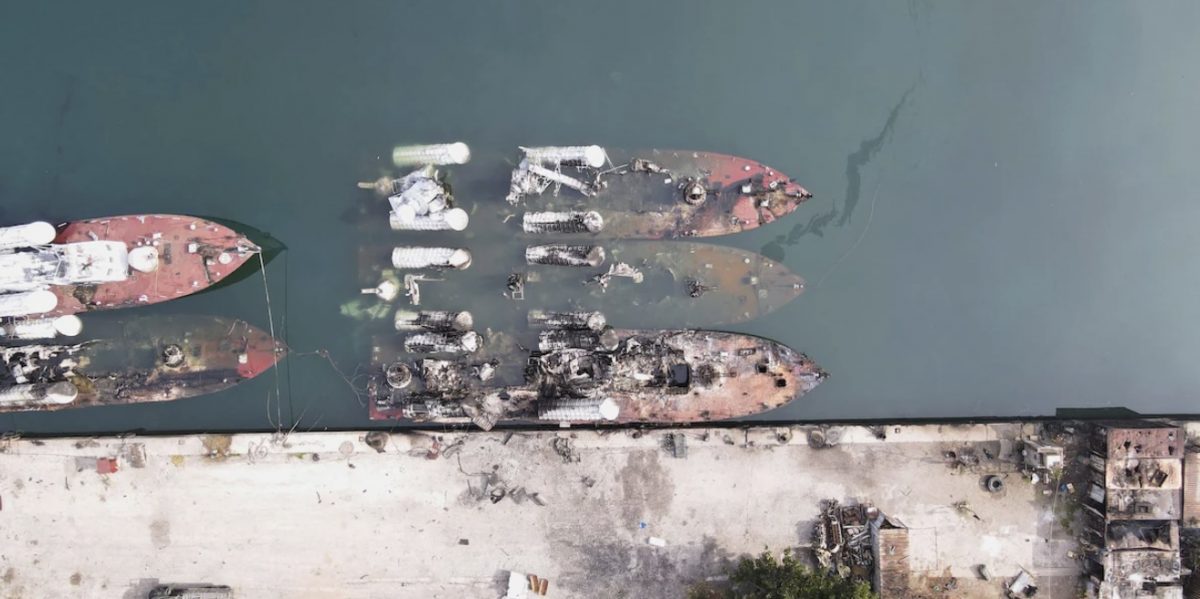
The above image shows some of the Syrian navy vessels destroyed by Israel this week.
Over the past 17 days, the system of (Baath Party + military) governance that the Asad family had maintained over Syria for 53 years underwent a catastrophic and complete collapse. This collapse had been many years in the making; and now, it has numerous implications for the regional balance in West Asia– not least for the serious blow it has delivered to “Axis of resistance”, the previously hardy alliance of regional forces working together to resist the cruel, expansionist assaults of the Israeli military. Asadist Syria had not been an active participant in those efforts, but it provided a key land bridge for interactions between the resistance forces in Iran/Iraq and those in Lebanon.
The severing of this land bridge will have significant, though almost certainly not fatal, effects on the capabilities of Hizbullah and its resistance allies in Lebanon. (We discussed some of these effects in the discussion I was part of in the Electronic Intifada livestream on Wednesday.)
A potentially much more serious effect on the anti-Israeli resistance may well turn out to be the re-emergence throughout West Asia of the same kind of harshly anti-Shi-ite sectarianism that has been publicly displayed by leaders (and rank-and-filers) of the victorious, al-Qaeda-style Hai’at Tahrir al-Sham (HTS) movement that rode into glory in Damascus on Sunday and Monday. (We discussed that, too, in the livestream. An imperfectly edited version of the transcript of our convo can be downloaded here.)
But even far beyond West Asia, the collapse of Asadist Syria, and indeed of the Syrian state itself in any recognizable form, and the manner in which that collapse transpired, will have stark– and as of now, only dimly predictable– repercussions on a global balance that has anyway been in an increasing degree of flux over recent years.