What this war is about

Let me first state what this Israeli-U.S. war against Iran is not about. It is not about “democracy” in Iran. It is not about Iran being anywhere near to– or even working to reach– the threshold of nuclear arms possession.

So what is it about?

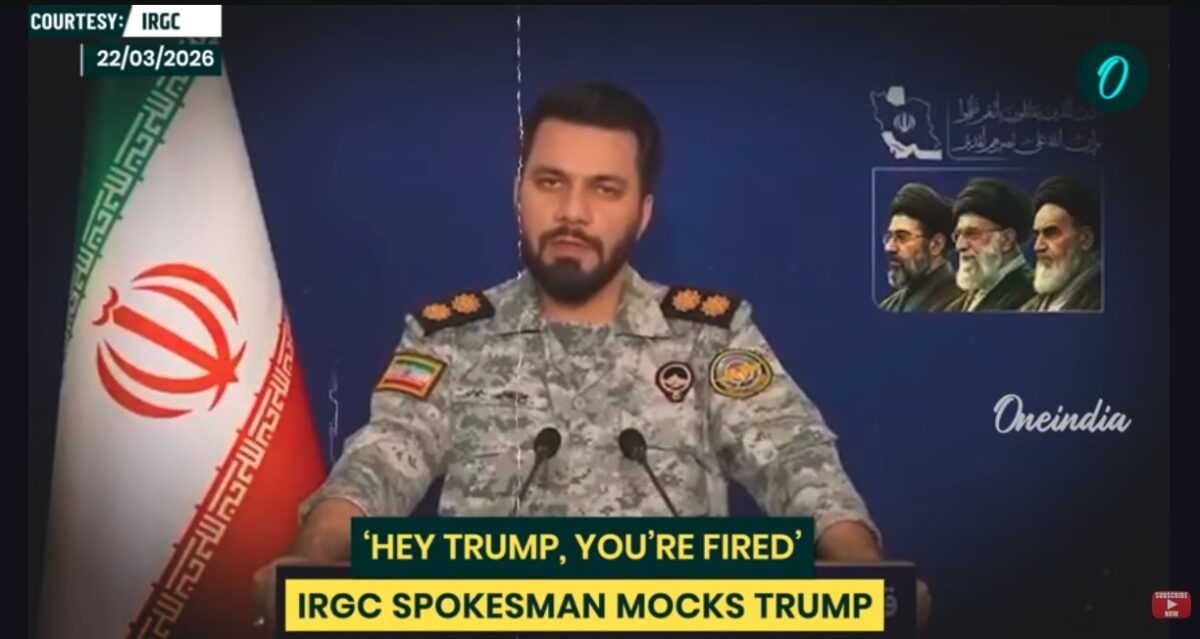
For the Zionist settler colonialists of Israel’s always hyper-militarized political elite this war is quintessentially “about” the continued existence of an independent, coherent Iranian state and the ability of this state to project power across much of West Asia. To be precise, for the Israelis, the war is about destroying the Iranians’ capability to maintain any such state.

For much of the (hyper-Zionized) U.S. political elite it is also about this. But in the ruling Republican Party here, the influence of the pro-Israel crowd has been sharply contested in recent months. And even in the (chronically pro-Zionist) Democratic Party leadership circles, the pro-Israel narrative has lost considerable power, especially among the broad ranks of politically engaged, and mainly younger, people. The perennial pro-Israel narrative does retain a strong grip on most of the country’s legacy media; but the reach and influence of that media has waned sharply in recent years, especially since October of 2023.

So a very large mass in the U.S. engaged body politic no longer buys Israel’s narrative about this war. Meantime– and this is worth noting– a very large portion of the engaged body politic has important family investments in the U.S. stock market, through their (our) retirement funds. Plus, nearly everyone in the U.S. is concerned about prices at the gas pump and their knock-on effect. So if they do not buy the Zionist narrative, for most of these people, why should they support this war, especially knowing that its economic costs will certainly continue to balloon, the longer it continues?


I have a different framework for looking at this war. I do not see it as being “just” about West Asia (the region formerly known as the Middle East), or “just” about the next one or two rounds of U.S. elections. I look at it from a perspective that is both historically and geographically much broader.

Continue reading “What this war is about”

The War on Iran: Notes on Day 14

Some careful analysts have been declaring a victory for Iran for several days already. Pres. Trump and Poppinjay Pete (Hegseth) have been declaring victory for the U.S. My judgment is closer to that of the “victory for Iran” people– although (1) the war is by no means over yet, and (2) the cost imposed on the peoples of Iran, Lebanon, and Palestine is, and will continue to be, horrendous. Here anyway, are my four current key takeaways, with more explanation below:

  1. The Islamic Republic of Iran has been holding up well. Its central decisionmaking structure remains in place and it’s been pursuing a smart, long-prepared plan for dealing with this assault.
  2. The stakes in this contest are global. The IRI deliberately globalized it from the first hours. China has an irreplaceable role in any termination or substantial de-escalation of the conflict. This affects the entire balance of geopolitics.
  3. The planning, execution, and nature of the Israeli-U.S. assault on Iran have been closely tied to (and grown out of) the Abraham Accords. The failure of the assault should now lead to the end of those accords.
  4. The choices that GCC leaders make over the coming days will be crucial.

Let’s take these one at a time:

Continue reading “The War on Iran: Notes on Day 14”

The U.S.-Israeli plot against Iran: The record of the past 15 months

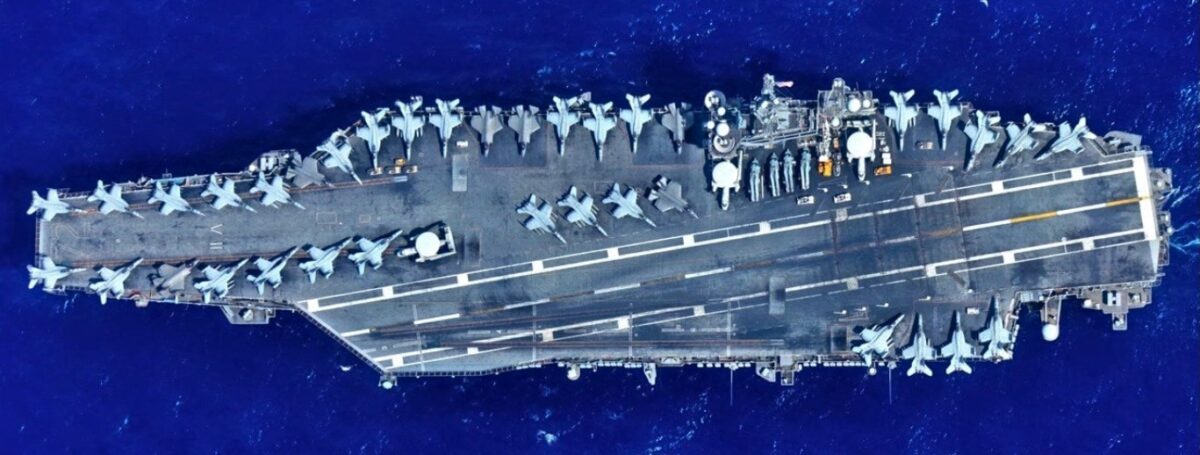
The Trump administration has now ordered a second Carrier Strike Group to join the one that is already sailing in the Gulf of Oman, close to Iran, and has deployed large amounts of military equipment (both offensive and defensive) to U.S. bases across West Asia, and to Israel. Trump’s envoys have now had two rounds of “proximity talks” with Iranian counterparts this month, discussing new limitations on Iran’s nuclear enrichment program.

Both sides have said those talks went fairly well. But Washington now expects Tehran to present more detailed plans by March 3 and Trump has warned that if Iran fails to reach a satisfactory agreement, then it will face very serious military consequences.

Some analysts have gauged the probability of an all-out war at “80 to 90 percent.” Such numbers are still wildly speculative (and personally I would peg them far lower than that.) But in assessing the possibility of any major military engagement between the U.S.-Israeli alliance and Iran it is crucial also to assess the range of outcomes and knock-on effects that we can plausibly foresee from any such conflict, at a number of different levels:

  • within the immediate theater of the conflict (Iran, the Gulf region)
  • in the Mashreq (Levant) region which has Israel at its geographic core, and specifically, on Israel’s ability to continue imposing its diktat on its neighbors in the region, and
  • on the stability and integrity of the global system as a whole.

In this essay, I shall review the record of the project to weaken or topple Iran’s current, 47-year-long system of governance that the Trumpists and the government of Israel have jointly pursued in the period since Trump’s victory in the 2024 election, and identify six key takeaways we can take from that review.

In a later essay, I plan to build on this analysis to provide a few preliminary guidelines for what the effects of any new Trump-Israel assault on Iran might be, at the three levels identified above.

Tracking the Trump-Israel plot against Iran

Continue reading “The U.S.-Israeli plot against Iran: The record of the past 15 months”

The status and meaning of Trump’s Gaza ceasefire deal

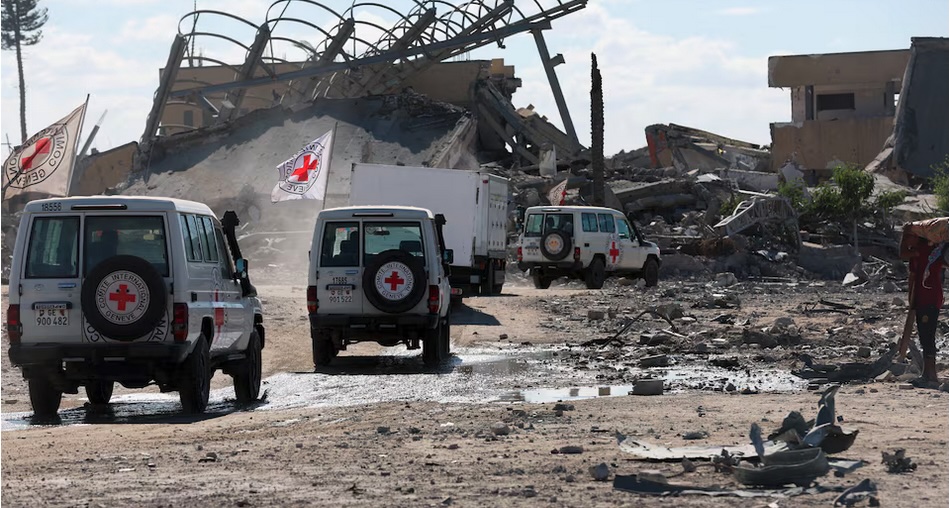
On October 10, the devastating bombings and other attacks that the Israeli military has undertaken against Gaza nearly continuously for the past two years finally came a halt. (Or nearly so, see below.) The Israeli military’s massive tanks and bulldozers began to lumber their way out of some– but far from all– of the parts of Gaza they had devastated over those 24 months. Some aid trucks started to roll in. Hundreds of thousands of the Palestinians who’d been forced, under withering Israeli fire, to evacuate south from Gaza City started to trudge back north to their former– very often completely pulverized– homes.

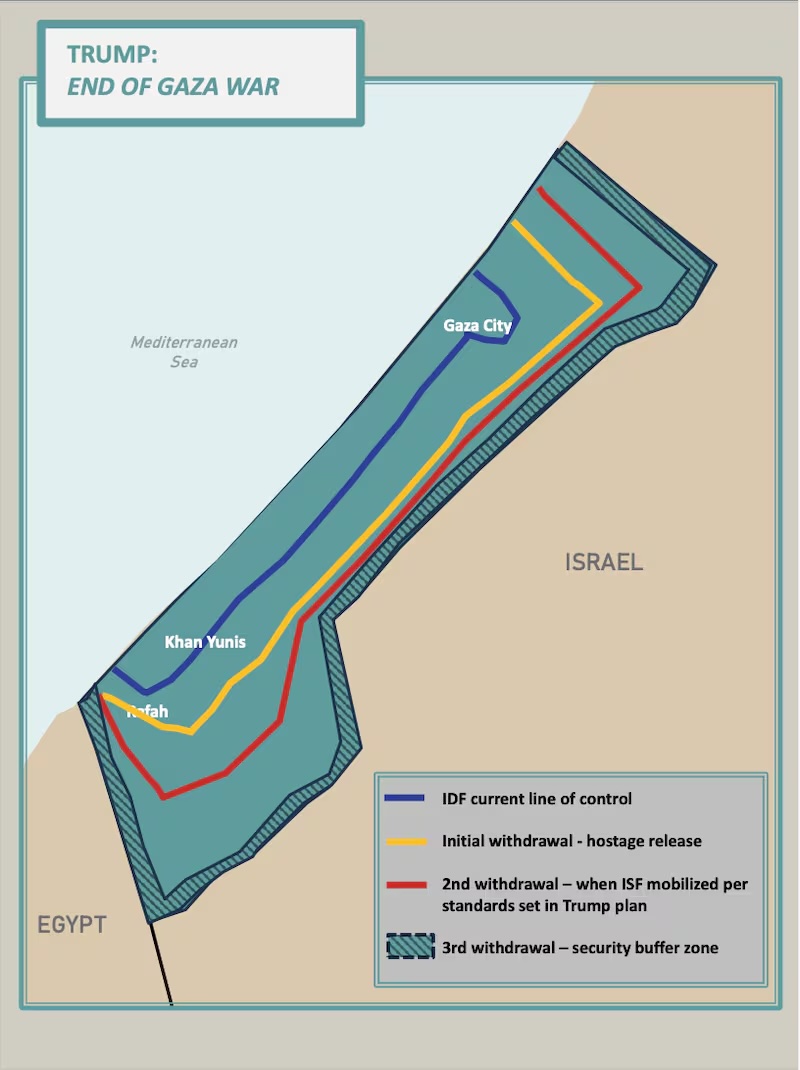
Phases of withdrawal in Trump’s plan. Source. Click to enlarge.

U.S. Pres. Trump was the one who successfully forced the Israeli government to sign onto that ceasefire agreement. (He could, at any moment since his inauguration back in January, have used Washington’s near-complete sway over Israel’s military decisionmaking to force that same outcome… And so, at any point in the preceding 15 months, could his predecessor in the White House. How many thousands of lives and destinies would have been saved?)

On October 13, as the reciprocal captive-exchange portions of the October 10 agreement were completed, Trump organized two large, splashy public events– one in Israel, one in Egypt– at which with his now horribly familiar braggadocio he took his victory laps for the ceasefire.

Continue reading “The status and meaning of Trump’s Gaza ceasefire deal”

A Jewish State in Palestine: The UN’s Original Sin?

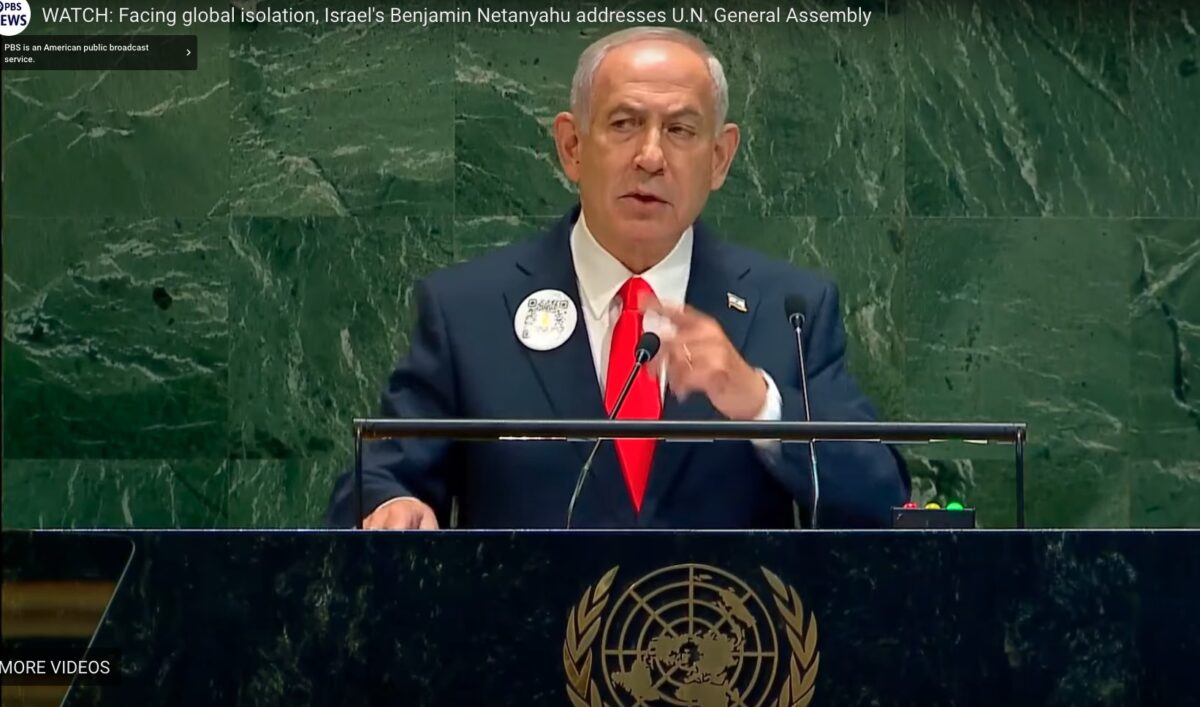
On a day when an indicted war criminal and the author and Kommandant of an ongoing genocide gets to speak from the rostrum of the world’s most august and authoritative governance body… We should ask whether this tradition of coddling and endlessly appeasing the leaders of a brutal settler-colonial project in Palestine dates back, indeed, to the founding years of the United Nations and the decision an earlier UN General Assembly took in November 1947 to partition historic Palestine and assign to that small proportion of its residents who were participants in the Zionist settler project, their own independent ethno-state state and to allocate to it, moreover, a wildly disproportionate amount of Palestine’s fertile land and other resources.

Today, at a time when Israel’s government and military continue their genocide in Gaza– and their ethnic cleansing in Jerusalem and the rest of the West Bank… and their continuing aggressions against Syria, Lebanon, Yemen, and even a small unarmed flotilla of humanitarian activists– we should ask whether this two-year-long orgy of Israeli violence is now bringing down not just the global power of its main backer in world affairs (whose own foundation as a “nation” lay also, lest we forget, in a settler-extremist rebellion against the metropole), but also the United Nations itself.

Continue reading “A Jewish State in Palestine: The UN’s Original Sin?”

Palestinian statehood and international legitimacy

The recent announcements by the governments of France and the U.K. that they have some (limited) readiness to “recognize” a Palestinian state change nothing– either regarding the genocide in Gaza or in the diplomacy over the Palestine Question more broadly. What they do do, however, is highlight once again the debate that has long simmered within the Palestinian-rights movement over whether the goal of the Palestinian movement should be a fully democratic one-state situation (‘solution’) or a two-state situation in which Palestinian and majority-Jewish Israeli states co-exist side-by-side in the land of historic (Mandate-era) Palestine.

But maybe now is a good time to re-examine another formula that’s been on the table for nearly 80 years now: that of, effectively, the three-state situation prescribed by the Partition Plan for Palestine as defined in the UN General Assembly’s Resolution 181 of November 1947?

That 1947 Partition Plan is, after all, the only authoritative and geographically delineated plan for governance in historic Palestine that carries the imprimatur of the UN and thereby its certificate of international legitimacy. And we should all care about international legitimacy, right?

Continue reading “Palestinian statehood and international legitimacy”

Extent of the US-Israeli backfire in their June war on Iran

On July 1, Sina Toossi published an important piece in Foreign Policy mag in which he argued that the “12-day war” that the US-Israeli alliance launched against Iran on June 13 had backfired, primarily in terms of its nuclear-nonproliferation goals. He wrote:

There is no question that Israel achieved notable tactical successes, inflicting serious damage on Iran’s military command and scientific infrastructure. But … based on available evidence, Netanyahu’s core goals—undermining Iran’s deterrence and meaningfully rolling back the elements of its nuclear program that pose the greatest proliferation risk—remain unmet.

One of the most significant failures lies in the nuclear file…While Trump administration officials have insisted that the strikes set Iran’s program back by years, early U.S. and European intelligence assessments suggest otherwise.

On July 8, Israeli military/intel analyst Moty Kanias followed up with this analysis, along similar but notably broader lines. Here were his heading and subhead:

Continue reading “Extent of the US-Israeli backfire in their June war on Iran”

The West’s domination of the Rest needs to end. (Part 1.)

In Gaza today, we see Israel’s cruel, violent, and always ‘West’-backed military working overtime to snuff out the existence of the Palestinians in Gaza and the West Bank, two areas that have always formed a key part of Palestinian national territory. This phenomenon is not new in the lengthy record of the actions that heavily armed, West-European-origined settler cohorts have taken against the Indigenous people of lands far from the shores of Western Europe. Indeed, it replays with disturbing accuracy the actions that violent Portuguese, Spanish, English, Dutch, and French adventurers took over the past 500 years against Indigenes in the Americas, Africa, Asia, Australasia.

But today, everyone worldwide can see this latest massacre of the Indigenes taking place in all-color video, in near-real time.

That vast, non-‘Western’ majority of humankind whose ancestors were the survivors of earlier White-Western settler rampages well understands what is going on, and stands aghast at the continuing, barbaric cruelty of the Israeli government and military– and also at the active complicity of the U.S. and many/most other Western governments. (Many citizens of those complicit Western countries are also aghast at the massacre in Gaza, though a disturbing proportion of them– of us– have been cowed, silenced, and blackmailed by the endless repetition of old tropes about the need for Westerners and others always to “support Israel.”)

It is ways past time for all of this– above all, the massacres themselves, but also the complicity and the silence– to end.

I have been actively calling, since early November 2023, for the United States to step aside from the lockhold it has exercised since 1990 (or earlier) on all dimensions of Arab-Israeli “peace-making.” By wielding this lockhold, successive U.S. presidents have not just allowed but also actively supported Israel’s continued suppression of Palestinian rights, its force-backed takings of Palestinian and Syrian territory, and its repeated wars against neighbors.

At the end of that earlier essay I noted that in 1956, an earlier U.S. president, Dwight Eisenhower, had intervened against the British, French, and Israeli governments to force them to reverse the large-scale land-grab they had just undertaken against Egypt. And Eisenhower achieved that laudable goal not through military action (though he had earlier been been a forceful and effective military commander.) Rather, he did it by using only economic pressure, flexing just a small portion of the dominance the United States enjoyed in the world economy back then, to bring those three aggressive rogue states to heel. (Tragically, their Tripartite Aggression of 1956 had harmed not only numerous Egyptian military and civilian installations but also the always vulnerable, overwhelmingly civilian population of Gaza, who also stood in Israel’s way…)

In my essay I noted that just a few days later, in mid-November 2023, the leaders of the United States and China would be meeting in San Francisco. And I asked whether that meeting might see some efforts to restore oversight over Arab-Israeli peacemaking to the United Nations, where it rightfully belongs, and to end the (sharply pro-Israel) U.S. oversight of that diplomacy.

That did not happen then, and it hasn’t happened since– despite so many of us having continued to call, with increasing urgency, for the world powers to decisively END the political protection and the active support that Washington and its minions have given to Israel’s genocide in Gaza.


Like the vast majority of other governments around the world, the People’s Republic of China has been strongly critical of that genocide since the beginning, as it had been of Israel’s many other violations of international law against Palestinians and others, for many decades prior. But Beijing has still taken zero visible or effective action, of the kind that Eisenhower took back in 1956, to rein in the US-Israeli assault on Gaza and push Israel back to its recognized international border.

In March, researcher Zhang Shen published this excellent analytical essay about China’s policy on Palestinian, in Mondoweiss. In it he wrote,

The seemingly promising bilateral [trade-focused] relationship between China and Israel from 2015 to 2020, once created some voices, both within Chinese and Israeli society, calling for a deeper strategic cooperation between the two states. Yet, what happened on 7 October 2023, and in particular the Israel bombardment of Gaza that followed, irreversibly destroyed the possibility of business as usual. 

Right after 7 October, the Israeli government demanded China condemn Operation Al-Aqsa Flood and to list Hamas as a terrorist organization, but unsurprisingly, China refused this demand. The Chinese government does not accept the Western-Israeli narrative that portrays 7 October as the start of history. Instead, China sees it as one of the many tragedies of the prolonged “Arab-Israeli conflict” inherited from British colonial rule. The PRC, as a regime that emerged out of Mao’s strategy of “people’s war,” guerrilla warfare, and anti-colonial armed struggle, remains inherently sympathetic toward other guerrilla forces of the Global South.

But still, until now, the PRC government has taken no concrete steps to end Israel’s genocide in Gaza or to challenge the “ironclad” protection and support that Washington has given to the génocidaires.

I guess there are a number of possible explanations. Maybe the CCP’s leaders do not care enough about what’s happening to Palestinians in Gaza to try to take action? Or– and this I find more likely– maybe they care very deeply but are still for a number of reasons wary of confronting Washington over an issue that, as they must understand, the powers-that-be in Washington have long judged to be of central importance to them.

Whether, when, and how, we might see some change in these judgments in Beijing (or, more accurately, in the well-guarded Zhongnanhai enclave where CCP leaders hold their most important conclaves) is what I’ll be exploring in the remaining portions of this series.

This is a matter of impact far beyond the misery-soaked ruins of Gaza. That tiny enclave is now the epicenter of the “last gasp” of the White/Western supremacist worldview that has dominated world affairs for the past four-plus centuries. What happens there matters to all of humanity.

Setbacks for the Axis of Resistance and for progress to a multi-polar world

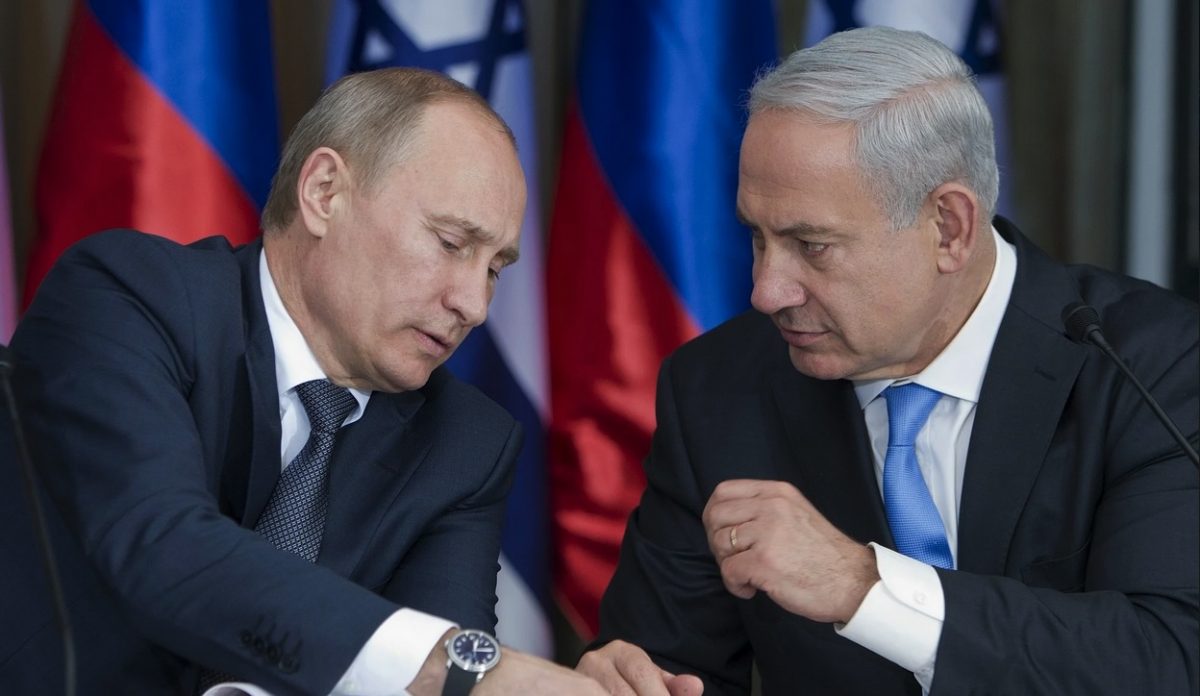
The above photo is from a meeting Pres. Putin had with PM Netanyahu in 2018, when they fine-tuned some arrangements for coordination (“deconfliction”) in Syria

On December 13, I made a first stab at analyzing some of the regional and global repercussions of the recent rapid disintegration of the Asad government in Syria– and indeed, also, of the Syrian state’s entire defensive capability, which Israel bombed to smithereens in the days (and hours) right after the collapse of Pres. Asad’s government on December 8.

Over the past week I have learned more, and I hope come to understand more, about the decision-making in Moscow that was a vital factor in Asad’s collapse– and also, about the possible effects of this collapse on the regional dynamics within West Asia, and on the worldwide balance of power in an era of rapid geopolitical change. In this essay I will sketch out some of my current thinking/understanding on these matters so crucial to the fate of humankind.

Continue reading “Setbacks for the Axis of Resistance and for progress to a multi-polar world”

Syria’s collapse and the global balance

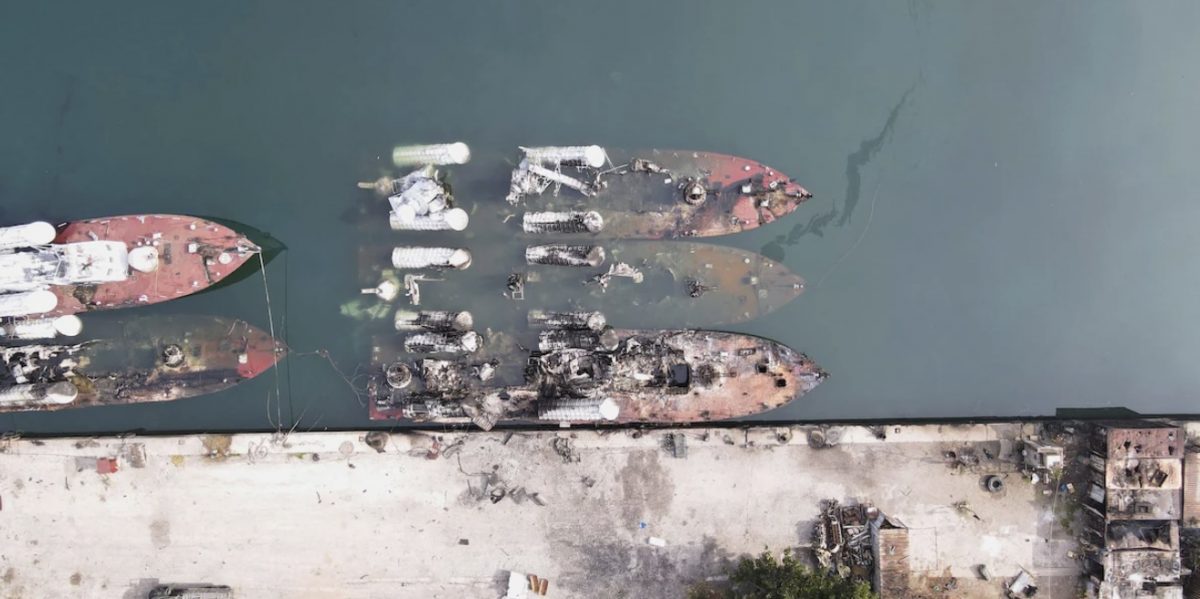
The above image shows some of the Syrian navy vessels destroyed by Israel this week.

Over the past 17 days, the system of (Baath Party + military) governance that the Asad family had maintained over Syria for 53 years underwent a catastrophic and complete collapse. This collapse had been many years in the making; and now, it has numerous implications for the regional balance in West Asia– not least for the serious blow it has delivered to “Axis of resistance”, the previously hardy alliance of regional forces working together to resist the cruel, expansionist assaults of the Israeli military. Asadist Syria had not been an active participant in those efforts, but it provided a key land bridge for interactions between the resistance forces in Iran/Iraq and those in Lebanon.

The severing of this land bridge will have significant, though almost certainly not fatal, effects on the capabilities of Hizbullah and its resistance allies in Lebanon. (We discussed some of these effects in the discussion I was part of in the Electronic Intifada livestream on Wednesday.)

A potentially much more serious effect on the anti-Israeli resistance may well turn out to be the re-emergence throughout West Asia of the same kind of harshly anti-Shi-ite sectarianism that has been publicly displayed by leaders (and rank-and-filers) of the victorious, al-Qaeda-style Hai’at Tahrir al-Sham (HTS) movement that rode into glory in Damascus on Sunday and Monday. (We discussed that, too, in the livestream. An imperfectly edited version of the transcript of our convo can be downloaded here.)

But even far beyond West Asia, the collapse of Asadist Syria, and indeed of the Syrian state itself in any recognizable form, and the manner in which that collapse transpired, will have stark– and as of now, only dimly predictable– repercussions on a global balance that has anyway been in an increasing degree of flux over recent years.

Continue reading “Syria’s collapse and the global balance”