No to war on Iran! No to U.S. hegemony!

Most people in the United States and other Western nations seem to consider it “normal”, or anyway unremarkable, that the U.S. should, on its own, have the authority to control and police the nuclear-enrichment projects of another country far away.

It is not.

There are a number of high-level UN bodies, with the Security Council at their apex, that have that authority. In 2015, the United States, the other four veto-wielding permanent members of the Security Council, and Germany jointly negotiated an arrangement with Iran that sought to address concerns that some countries had had about Iran’s nuclear-enrichment program. The agreement they reached, the “JCPOA”, was immediately endorsed by the Security Council.

In 2018, Pres. Donald Trump unilaterally pulled out of the JCPOA and restored many of the unilateral U.S. economic sanctions on Iran that had earlier been lifted under its terms. The JCPOA’s other (non-Iran) signatories expressed mild concern at Trump’s move, but took no other action. (When Joe Biden became president he took some inconsequential steps to rejoin the agreement, then abandoned the project.)

Continue reading “No to war on Iran! No to U.S. hegemony!”
The U.S.-Israeli plot against Iran: The record of the past 15 months

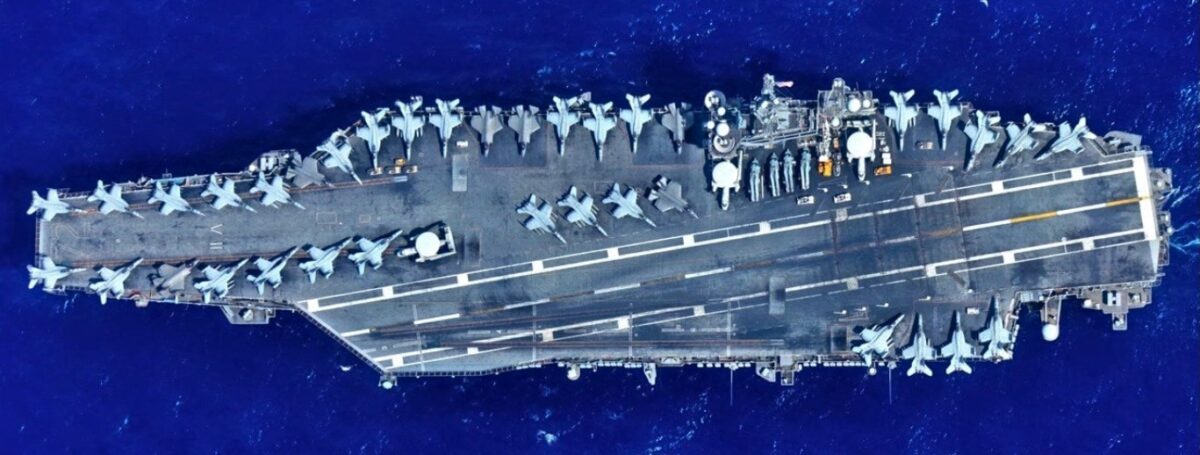
The Trump administration has now ordered a second Carrier Strike Group to join the one that is already sailing in the Gulf of Oman, close to Iran, and has deployed large amounts of military equipment (both offensive and defensive) to U.S. bases across West Asia, and to Israel. Trump’s envoys have now had two rounds of “proximity talks” with Iranian counterparts this month, discussing new limitations on Iran’s nuclear enrichment program.

Both sides have said those talks went fairly well. But Washington now expects Tehran to present more detailed plans by March 3 and Trump has warned that if Iran fails to reach a satisfactory agreement, then it will face very serious military consequences.

Some analysts have gauged the probability of an all-out war at “80 to 90 percent.” Such numbers are still wildly speculative (and personally I would peg them far lower than that.) But in assessing the possibility of any major military engagement between the U.S.-Israeli alliance and Iran it is crucial also to assess the range of outcomes and knock-on effects that we can plausibly foresee from any such conflict, at a number of different levels:

  • within the immediate theater of the conflict (Iran, the Gulf region)
  • in the Mashreq (Levant) region which has Israel at its geographic core, and specifically, on Israel’s ability to continue imposing its diktat on its neighbors in the region, and
  • on the stability and integrity of the global system as a whole.

In this essay, I shall review the record of the project to weaken or topple Iran’s current, 47-year-long system of governance that the Trumpists and the government of Israel have jointly pursued in the period since Trump’s victory in the 2024 election, and identify six key takeaways we can take from that review.

In a later essay, I plan to build on this analysis to provide a few preliminary guidelines for what the effects of any new Trump-Israel assault on Iran might be, at the three levels identified above.

Tracking the Trump-Israel plot against Iran

Continue reading “The U.S.-Israeli plot against Iran: The record of the past 15 months”