Last Friday, I set out (with a slight excess of ambition) to compile ten theses that might help guide analysts and policymakers through the uncharted waters of the coming weeks of the Gaza-Israel crisis. As it happened, I was able only to complete the first six of these, which can be read here. I attempted a first draft of Thesis 7, but had to stop midway through. I have now rethought and redrafted Thesis 7 and added in Theses 8-10, as shown below. (You can also read the whole unified list of ten theses, here.)
7. Israel’s decisionmaking is mired in chaos
I wrote some about the crisis of Israel’s leadership decisionmaking early last week (1, 2.) Since then, a lot more evidence has emerged about the depth and many different dimensions of this crisis, including in the NYT, in Haaretz, and elsewhere. What all these accounts point to is the following:
(This post was updated at 7:30 am ET on 10/18/2023.)
I was tempted to title this post “Abu Mazen is toast”, but then I thought that wouldn’t be very helpful. The real political challenge for Palestinians right now is not the old age and extreme political infirmity of one ageing leader but rather the need to reimagine and reinvigorate the leadership of their entire national-liberation and national-independence movement.
It was in 1968-69 that, in the aftermath of the Arab states’ defeat at the hands of Israel in 1967, the collection of mostly small, mostly secular Palestinian guerrilla groups that grown up within the Palestinians’ far-flung diasporic communities came together to take over the Palestinian Liberation Organization (PLO), a body that had been created by the Arab League in 1964. (Read all about it in my 1984 book on the PLO.) The largest of those guerrilla groups was Fateh. Fateh’s collective leadership body decided that Yasser Arafat should be the person to head the PLO. The Arab states agreed with that. (In 1970-71, Jordan’s King Hussein launched a harsh crackdown on Palestinian guerrilla activity and organizing that was occurring among the Palestinian refugee populations that then, as now, formed a majority of Jordan’s population. But his crackdown did little to dent the general Arab-state consensus that the PLO was the “sole legitimate representative” of the Palestinians.)
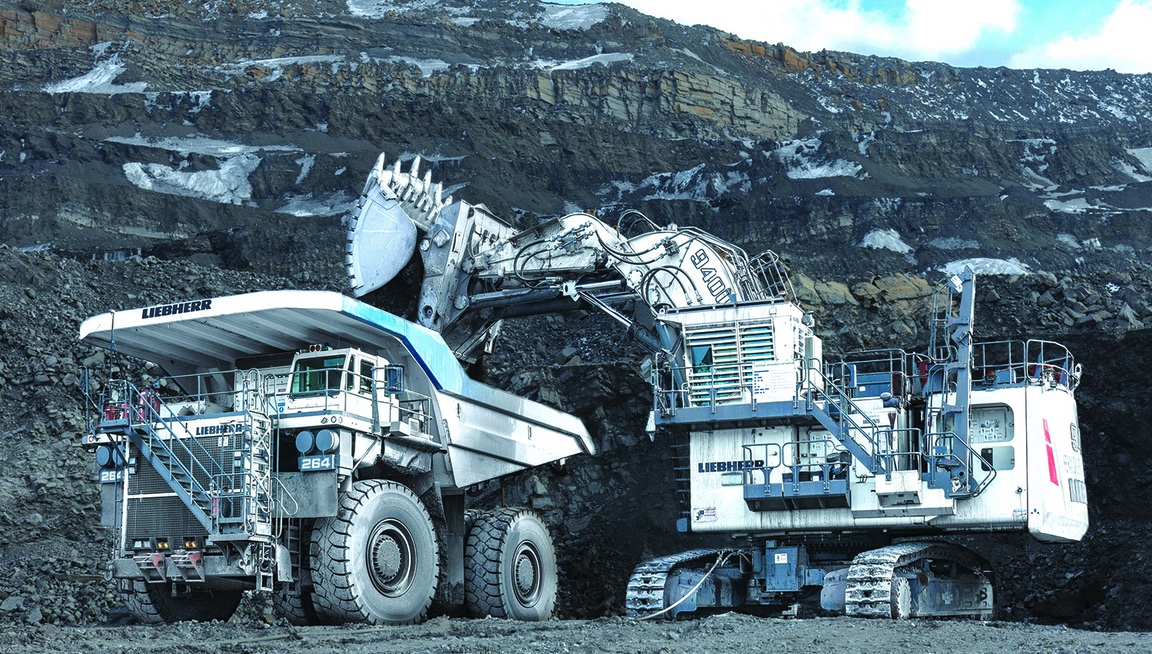
The image above shows a Liebherr mining excavator and associated truck. Such an excavator can weigh > 800 tons and produce 4,000 horsepower
The crisis that our climate is in is now evident to all. It reminds us of the extreme risks humankind ran by failing to rein in our emissions of CO2 and other greenhouse gases. Many of us have long understood that fossil fuels that exist in limited quantities—and that as humankind draws those fuels down toward “empty” we will need to have in place robust energy systems based on renewables. But there are three other broad types of planetary resources whose depletion by humans is now also close to crisis point. These three categories are: metals, non-metallic minerals, and biomass.
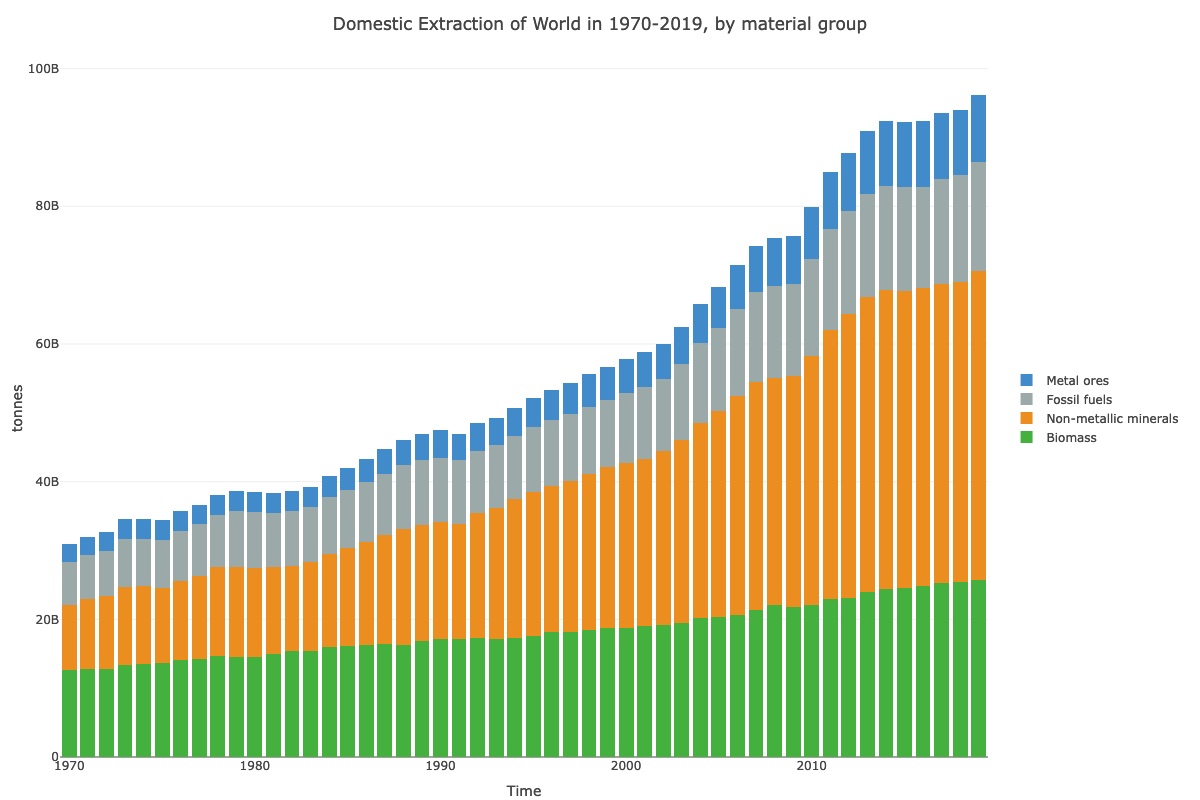
This graph from the University of Vienna’s excellent Materialflows.net website tracks the annual global extraction of all of these four resource categories over the half-century 1970-2019, measured in billions of tonnes. In those years, the annual extraction of fossil fuels (grey) increased by around 150%. But the annual extraction of of metals (blue) and non-metallic minerals (orange) both increased by around 350%.
The world population of humans increased by 110% in that period—which was roughly proportional to the increase in the extraction of biomass, shown there in green.
By the way, sustainability scientists calculated a while back that 50 billion tonnes of total annual resource extraction is roughly what’s sustainable over the long haul. We breached that limit in the mid-1990s and are now close to extracting twice that amount.
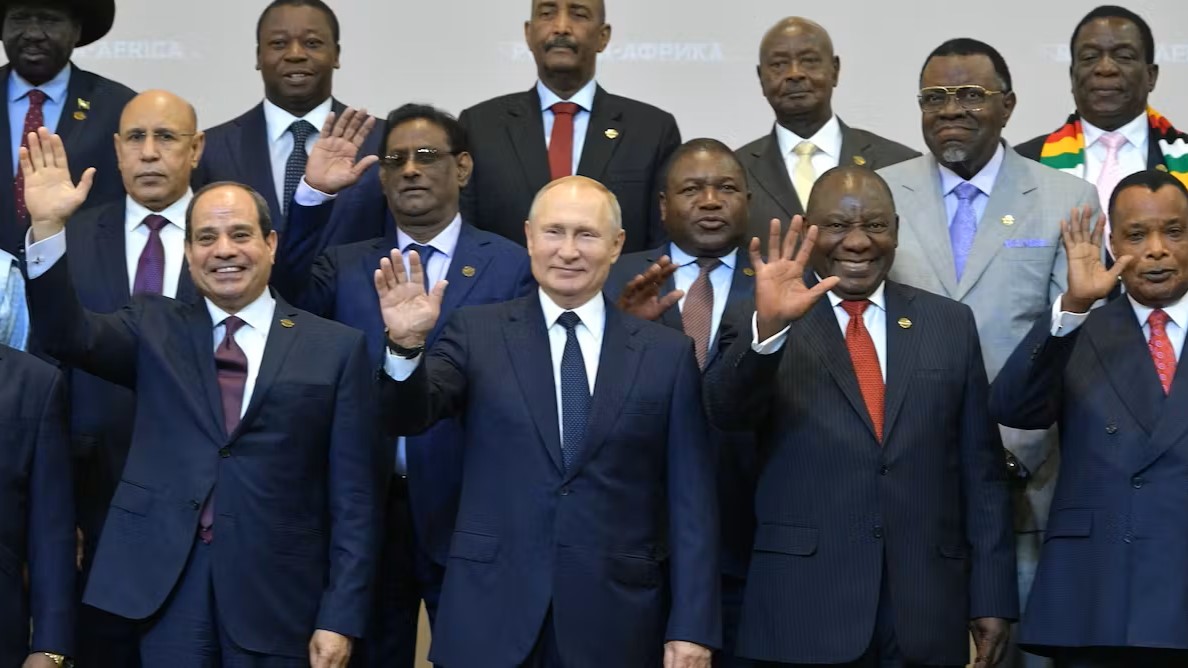
Above: Pres. Putin poses with some of the African leaders who attended the Russia-African summit he hosted this past week
Biden administration officials and their supporters have long claimed that the conflict in Ukraine is a clear-cut contest between “democracy” and “authoritarianism” that affects the whole world… and that on that basis the countries of the Global South should line up to support NATO’s campaign against Russia. One big recent version of this argument has been the claim that Russia’s refusal to renew the agreement allowing Ukraine to export grain via the Black Sea is raising grain prices and preventing much-needed foodstuffs from reaching hunger-struck countries in Africa…
But the campaign to win global support for NATO’s anti-Russia crusade has never been very successful. Recall that in the three votes Washington initiated at the UN last year to denounce Russia’s actions inside Ukraine (e.g., 1, 2), three dozen countries including global behemoths China, India, and three dozen other countries failed to support the “Yes” vote.
And just this past week, the proceedings of key gatherings held in South Africa and Moscow have underscored the extent to which the “West” has lost the support of that large majority of humanity that lives in the formerly colonized countries of the Global South. (If indeed, it ever had it… Perhaps a better description of what’s been happening in recent months is that the West is now revealing itself as incapable of imposing its will on the countries of the Global South. More on this, later…)
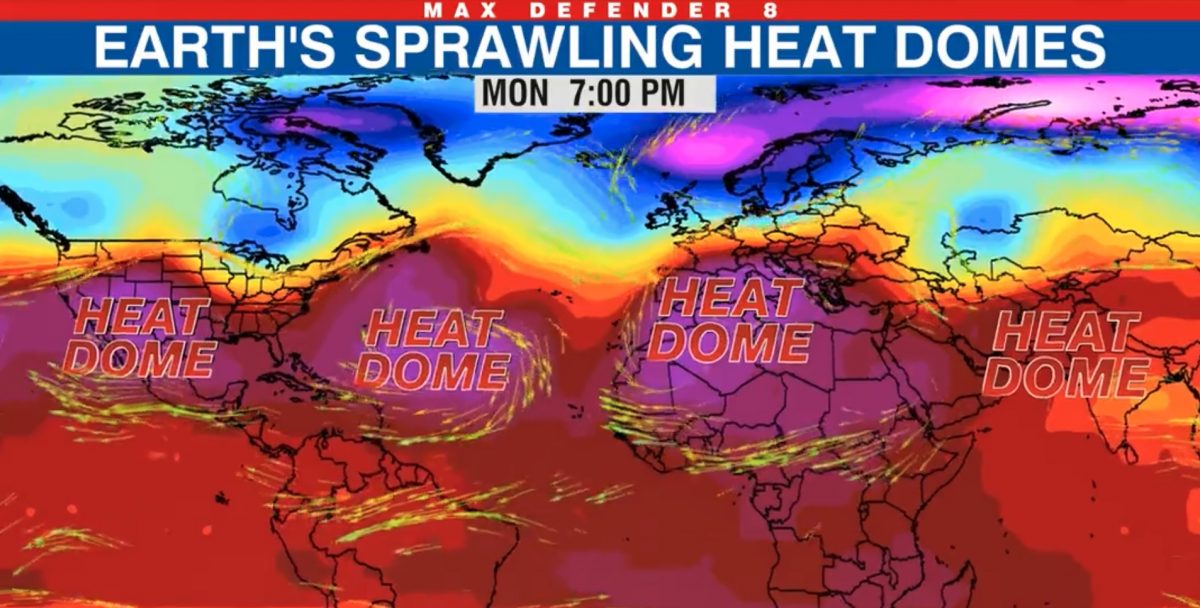
The above image shows four major heat-domes over the northern hemisphere this week. Credit @WeatherProf via Umair Haque
The climate crisis we’re living through this year is real. It’s global. And it’s just a foretaste of what humankind will see over the years ahead if the leaders of our most powerful governments don’t find a way, SOON, to work together to address it.
The impact of this crisis (actual, and forecast) puts the conflict in Ukraine that has dominated the attention of Western media for so long now into a much more realistic and sobering perspective. From a global point of view, the conflict in Ukraine is yet another localized tiff between different factions in that tiny (< 12%) portion of humanity that is of European heritage. And by contrast with the two larger intra-European conflicts of the 20th century, this time around most of the rest of global humanity is actually very little involved. During the two intra-European wars of the 20th century, the global reach of that era’s European empires brought hundreds of millions of non-Europe directly into the hostilities—as combatants, as conscripted labor, or as direct or indirect victims of the conflict.
This time, not nearly as much. This time, quite appropriately, the reaction of the vast majority of non-“Western” governments and peoples to the intra-European conflict in Ukraine is mainly: meh.
It’s not that the Ukraine conflict hasn’t harmed the peoples of the Global South. It has. The main ways it has done so have been:
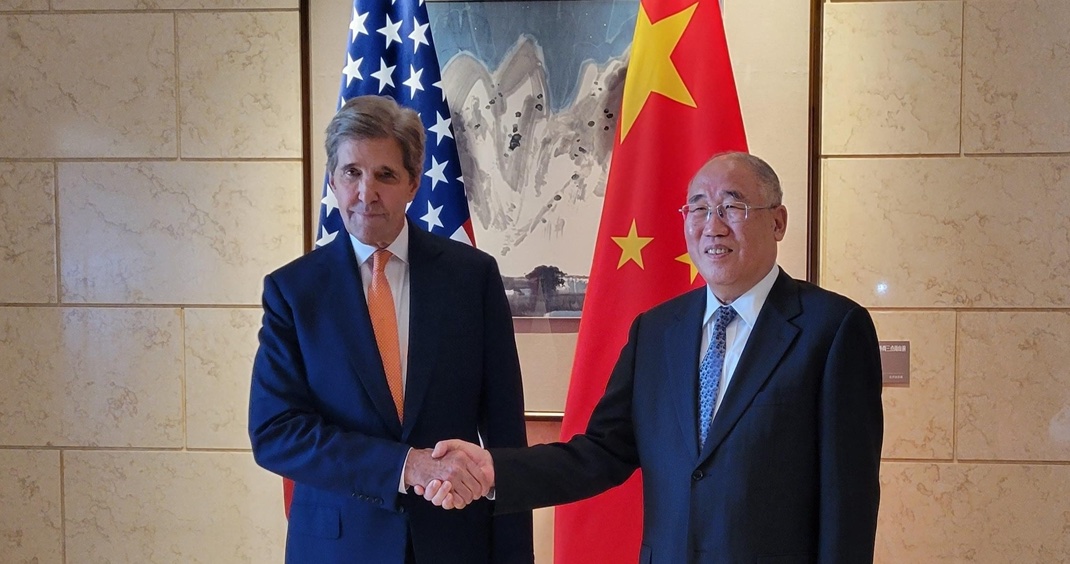
Have you, like me, been wondering what U.S. “climate czar” John Kerry has been talking about with his hosts in a Beijing that, like much of China and the United States, is drenched in extreme weather events?
If you read the (uber-nationalist) New York Times account of the meetings, you’ll learn that Kerry lectured and hectored his hosts. The Washington Post account was more measured, starting as it did with this lede:
John F. Kerry praised China’s “incredible job” expanding renewable energy sources Monday, while urging the world’s largest greenhouse gas emitter to stop building coal-fired power plants.
Let’s hope that Kerry’s approach toward his hosts was indeed respectful and collaborative. The fate of humankind and our whole, deeply troubled planet hangs on these two mega-powers finding ways to work together to reduce greenhouse gas (GHG) emissions, while also reining in the currently raging over-depletion of all of our planet’s material resources.
If these two governments cannot overcome, or set aside, their political differences and find a way to work together to reduce CO2 emissions and resource depletion, then we will surely, within the next 20 years, see extreme weather events “baked” into all of the world’s climate system. We will also see entire economies, small and large, forced screeching to a halt—and also, all the social and political turmoil that will predictably result from that.
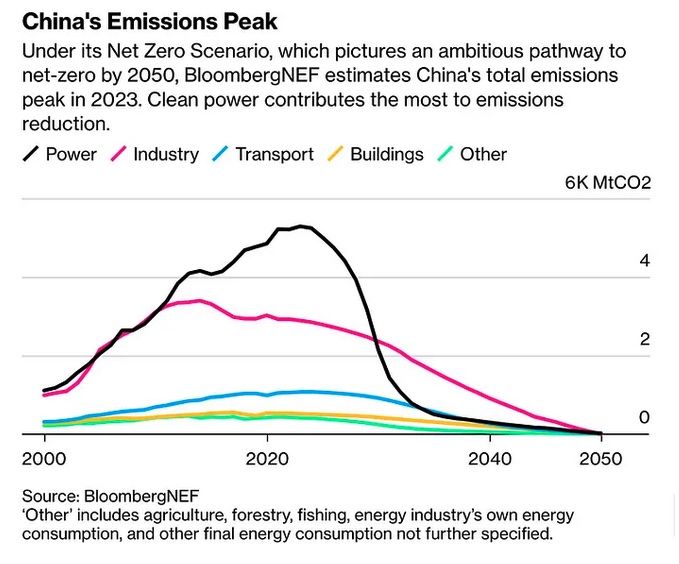
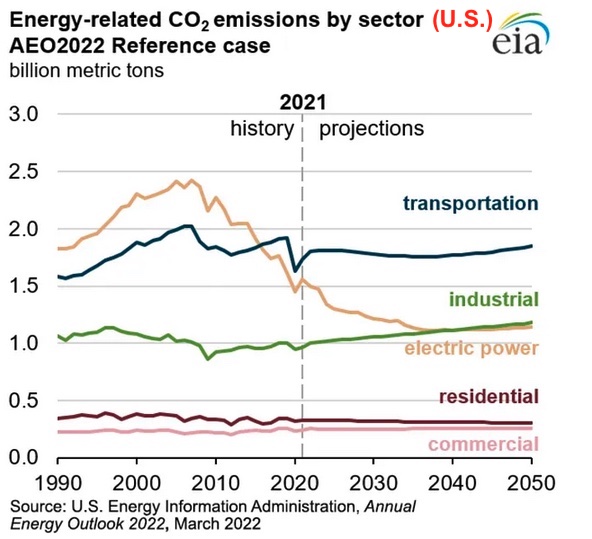
First, two key pieces of data regarding these two countries’ recent and projected CO2 emissions:
Click on either graph to expand it. The y-axes (verticals) show the same thing: billions of metric tons of CO2 emissions—but to different scales, as shown. The x-axes show past reported CO2 emissions levels through 2021 or 2022, and then projections from then through 2050.
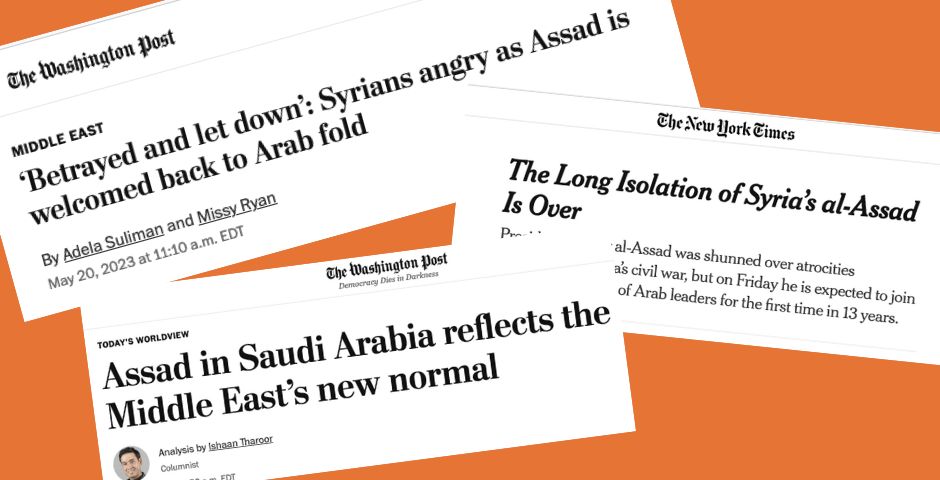
The Western corporate media that for 12 years have cheerled the brutal regime-change project in Syria are still sore about the fact that the project failed and that the other Arab states have agreed to reinstate Syria into the Arab League. So in what they’ve been publishing about Syria in recent days—whether “news” or “opinion”—they still clearly embody the deeply one-sided way they have been “covering” Syria for many years now.
(Other voices can be found—if you know where to look. I’ll come to one of them a little lower down here.)
The story in today’s WaPo that purported to tell us how “Syrians” feel about Pres. Bashar al-Asad’s participation in last Friday’s Arab League summit was a classic. “Syrians”, the headline tells us magisterially, “feel anger, hurt as Assad is welcomed back to Arab League.” But no attempt was made by the two reporters bylined there to, um, actually go to Syria and ask that majority of Syrians who live in areas under the government’s control. Instead, they are writing with no dateline, that is, presumably working the phones and the WhatsApp lines from Washington, to the three named sources whom they quote. One of those sources is described as currently located in Qatar, one in Germany, the other, not located.
The reporters make a couple of references to them as “Syrian activists“, a deliberately vague descriptor that is usually understood to mean “Syrian pro-regime-change activists”… But then they also, several times, build on those quotes to conclude that “Syrians” (meaning, presumably, all Syrians) feel that same way.
That is exactly how, through lazy writing based on a barrow-load of wishful thinking, pro-war propaganda gets ever more deeply embedded into the minds of readers. It really makes you wonder. If all “Syrians” feel exactly that same way, how on earth did the Syrian government manage to survive the 12-year-long regime-change campaign?
David Ignatius, long the national-security journo with the closest access to Democratic decision-makers, wrote in an intriguing column in today’s WaPo that National Security Adviser Jake Sullivan’s recent meeting in Vienna with top Chinese diplomat Wang Yi, “Sullivan praised Wang’s mediation of the bitter rivalry between Saudi Arabia and Iran… welcoming China’s effort to de-escalate conflict in the region.”
This is a real turnaround. It deals a strong serious blow to all the anti-Iran hawks in Israel and Washington who have tried to keep Saudi Arabia and the UAE firmly in the anti-Iran camp, and have downplayed the significance of the region-transforming rapprochement between Iran and Saudi Arabia that Wang unveiled in Beijing back in March.
Ignatius diplomatically buried this significant news item down the near the bottom of today’s column. The column also offered many other tidbits indicating that the Biden administration is now finally recognizing the folly, at a time of intense confrontation with Russia, of trying also to maintain or ramp up an intense confrontation with China.
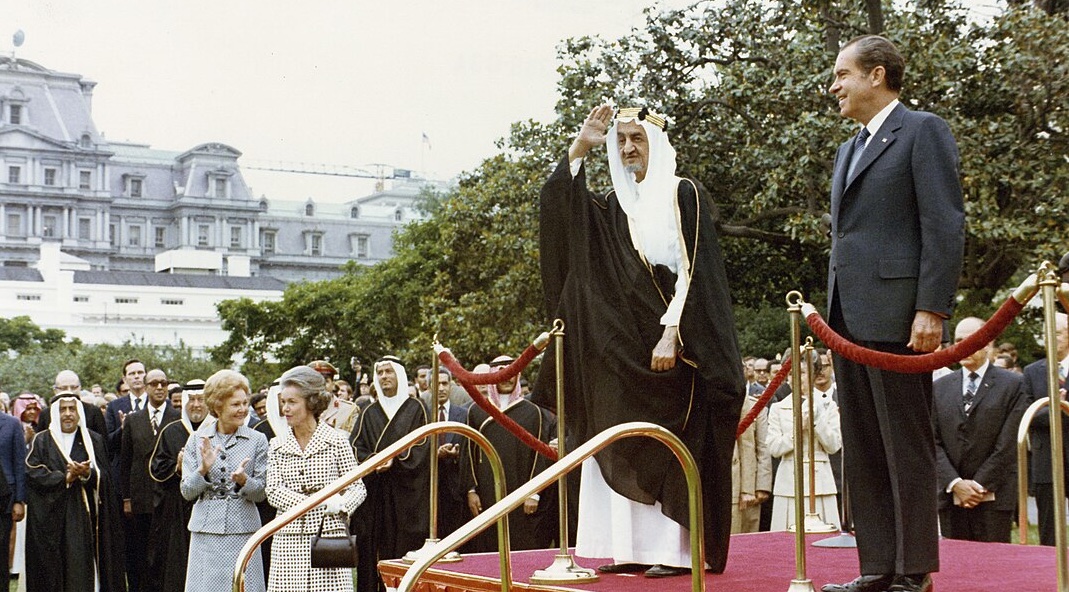
The image above shows Saudi Arabia’s King Faisal and Pres. Nixon, on the White House lawn in 1971, the year Nixon unpegged the dollar from the gold standard
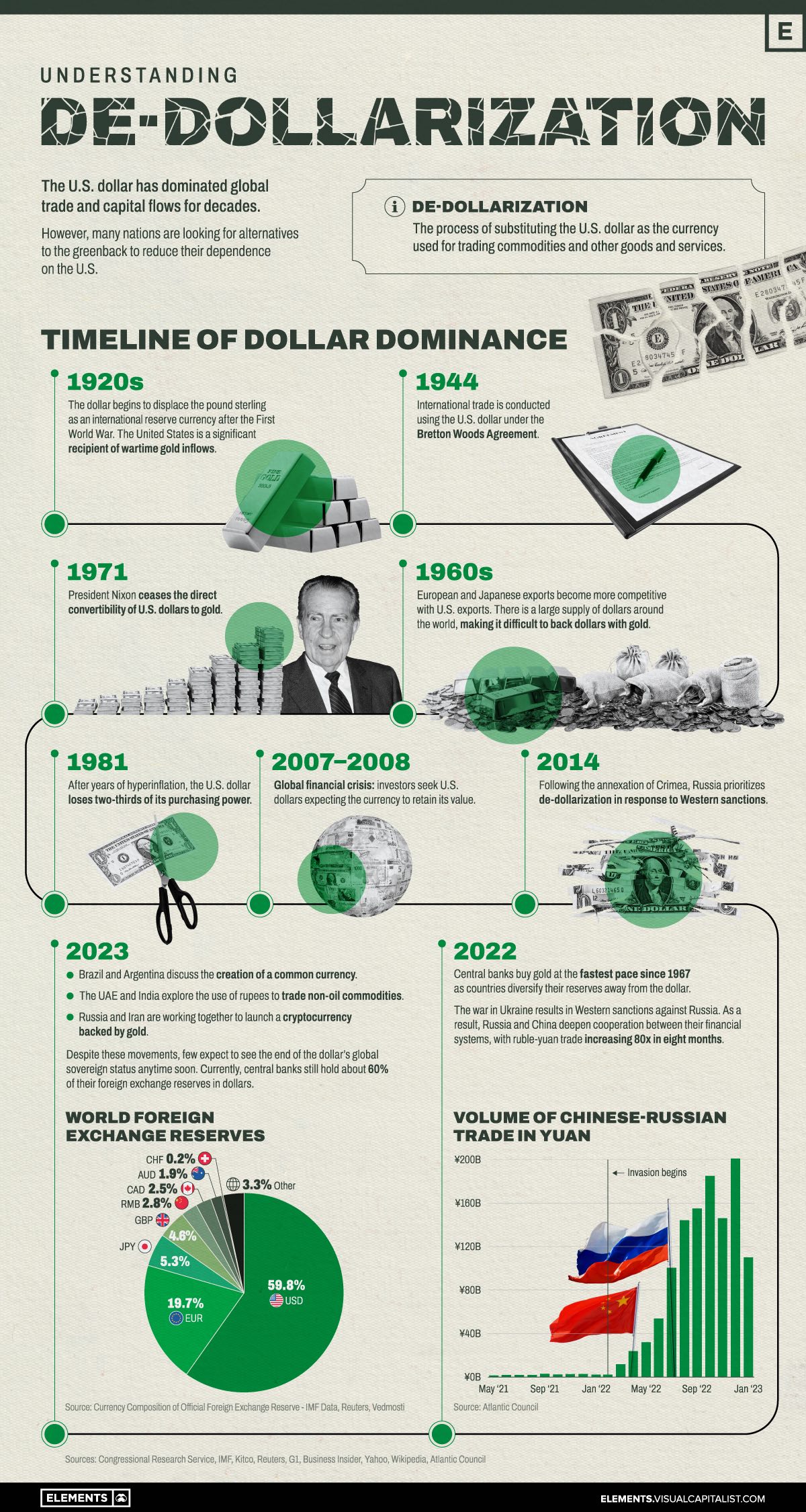
De-dollarization — that is, the choice that countries in the Global South have been making to conduct their trade in currencies other than the U.S. dollar — is a growing global phenomenon. It has profound implications for the economic situation in not just countries of the Global South but also Europe and (especially) the United States. It is a trend that strikes at the heart of the hegemonic, dollar-dominated “world order” that has existed since 1945, and is a key marker of the ongoing shift toward multipolarity.
Fairly good explanation of de-dollarization from Visual Capitalist. Click to enlarge
De-dollarization is intimately linked to developments in the world hydrocarbons business, including the decision U.S. elites made more than a decade ago to increase domestic shale-oil drilling, which over the years transformed the United States from a net importer to a net exporter of oil and gas products. That shift acted as a key catalyst spurring countries in and far beyond West Asia to base their trading relationships on currencies other than the greenback. The shift also upended Washington’s relationships with key oil producers in West Asia, which then provided a significant opening for the expansion of China’s influence in that vital region.
Those trends were all discernible before 2022. But when Washington (responding to Russia’s invasion of Ukraine) slapped harsh sanctions onto Russia, it boosted all of them into an overdrive that now looks poised to radically transform not just the global economy but also the global power-balance as we have known it since 1945. In this essay, I’ll quickly pull together what some key thinkers from North America, Europe, West Asia, and elsewhere have been writing about the current push toward de-dollarization and its impact on world affairs.
1.
One of the latest pundits to weigh in on the impact of de-dollarization has been Frank Giustra, co-chair of the influential, West-dominated Crisis Group think-tank. In a May 3 article at Responsible Statecraft, Giustra made the powerful argument that the United States’ true strength in international affairs lies not in its military but in the role of the dollar.
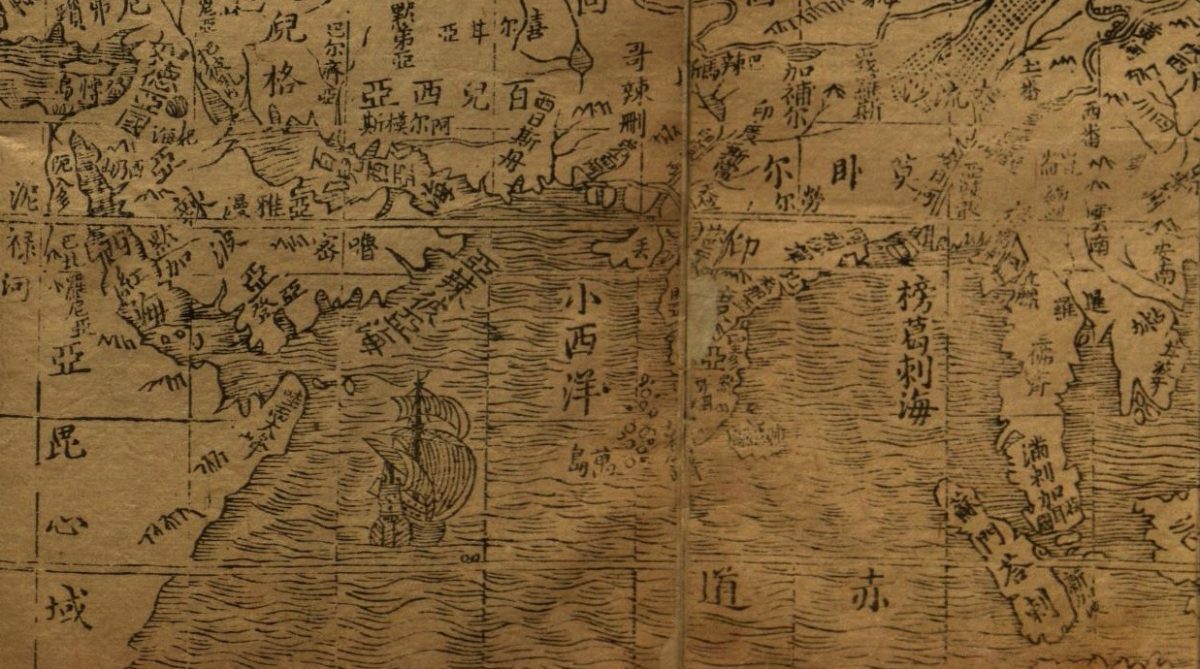
(An early 17th century Chinese map of part of the Indian Ocean, using data gathered by Zheng He’s voyages of 200 years earlier. The Arabian Peninsula is at the left. Source.)
Over the past couple of months, in my essays here at Globalities I’ve been tracking the current crumbling of the decades-old system of Washington’s global hegemony and its gradual replacement by a China- and BRICS -led system of multipolarity—and also some of the effects of that shift, in West Asia and elsewhere. Most recently, we’ve seen China’s President Xi Jinping pushing forward his previously announced readiness to help resolve the conflict in Ukraine. If successful, this initiative could bring about a further large diminution of U.S. power in the world.
We should all continue watching the progress of the China-led peace initiative for Ukraine very closely. In today’s essay, however, I want to explore some of the impact that this “West to the Rest” shift has already been having in West Asia (the region formerly known as “the Middle East”), and especially in and around the Arabian Peninsula.
Until recently, all the states of the Peninsula, with the exception of some substantial quasi-state actors in mountain-haven Yemen, have been unambiguously pro-American. The other states on the Peninsula are all wealthy petro-states. They have long maintained strong relationships with Washington under an arrangement whereby the United States promised to give them military protection provided they would continue to underwrite the U.S. military-industrial complex by buying large (and often quite unusable) inventories of U.S. weapons, and to support the role of the U.S. dollar in the global economy.
But in recent years, and even more rapidly since last year’s start of the big conflict in Ukraine,that “devil’s bargain” has started to fall apart. As Jon Alterman wrote recently about the region in Defense One: