

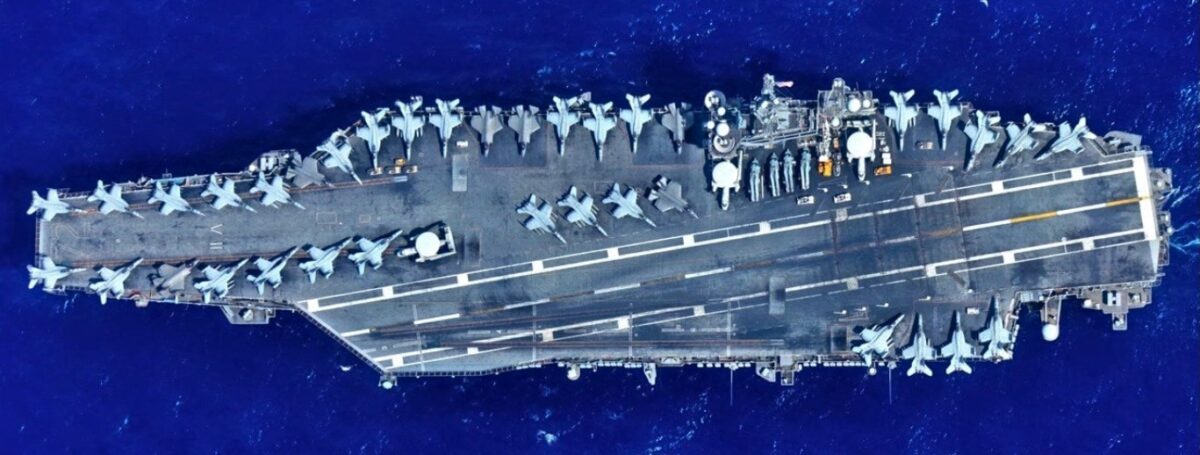
The Trump administration has now ordered a second Carrier Strike Group to join the one that is already sailing in the Gulf of Oman, close to Iran, and has deployed large amounts of military equipment (both offensive and defensive) to U.S. bases across West Asia, and to Israel. Trump’s envoys have now had two rounds of “proximity talks” with Iranian counterparts this month, discussing new limitations on Iran’s nuclear enrichment program.
Both sides have said those talks went fairly well. But Washington now expects Tehran to present more detailed plans by March 3 and Trump has warned that if Iran fails to reach a satisfactory agreement, then it will face very serious military consequences.
Some analysts have gauged the probability of an all-out war at “80 to 90 percent.” Such numbers are still wildly speculative (and personally I would peg them far lower than that.) But in assessing the possibility of any major military engagement between the U.S.-Israeli alliance and Iran it is crucial also to assess the range of outcomes and knock-on effects that we can plausibly foresee from any such conflict, at a number of different levels:
- within the immediate theater of the conflict (Iran, the Gulf region)
- in the Mashreq (Levant) region which has Israel at its geographic core, and specifically, on Israel’s ability to continue imposing its diktat on its neighbors in the region, and
- on the stability and integrity of the global system as a whole.
In this essay, I shall review the record of the project to weaken or topple Iran’s current, 47-year-long system of governance that the Trumpists and the government of Israel have jointly pursued in the period since Trump’s victory in the 2024 election, and identify six key takeaways we can take from that review.
In a later essay, I plan to build on this analysis to provide a few preliminary guidelines for what the effects of any new Trump-Israel assault on Iran might be, at the three levels identified above.
Tracking the Trump-Israel plot against Iran
I am not privy to any insider information about the origins or nature of this project. But it is possible to extrapolate backwards from various phenomena that we see in public that we know must have had a long time for their preparation– and also, in light of those (later) phenomena, to cast a fresh, more informed eye back on some earlier developments.
One possible example: the move that Pres. Trump speedily took, soon after he won the November 2024 election, to see a first round of the long-ready “ceasefire for hostages” agreement for Gaza nailed down and implemented even before his Inauguration on January 20, 2025. We could see that as an admirable humanitarian gesture. We could see it as an early bid to win his long-sought goal of a Nobel Peace Prize. Or we could see it as part of a plot to “pacify” Gaza to some degree while he undertook the many different tasks he needed to address as he worked with PM Netanyahu on a plan to overthrow the government of Iran– while it also allowed Israel’s military command to divert more of its attention back to the anti-Iran planning.
Or, some mix of all three of the above motivations might have been at play…
Anyway, as Trump and his trusted (and deeply pro-Israel) sidekicks Steve Witkoff and Jared Kushner started planning his return to the White House in late 2024, they were evidently in close touch with leaders in Israel who by then had done a lot to rebuild the military-strategic complex there that was so severely dented at many, many levels by Hamas’s Al-Aqsa Deluge operation of October 2023. (The U.S. government under Pres. Biden had, as we know, been an essential partner in that rebuilding effort to date.)
It is key to recall that when Hamas launched Al-Aqsa Deluge, one reason the Israeli military were caught so badly by surprise was that at the time they were focusing on the situation at Israel’s Northern border, where they were deeply engaged in preps for a multi-pronged attack against Hizbullah. Hizbullah is an indigenously Lebanese-Shiite political movement that is strongly represented in the Lebanese parliament. It had also long enjoyed a strong reputation in the sphere of military resistance, not least because on two earlier occasions, in 2000 and 2006, it was able to repulse and beat back very determined attacks the Israeli military had undertaken against Lebanon. By 2023, the network of very capable (and close-to-Israel) missile launchers Hizbullah commanded in South Lebanon had long acted as a powerful deterrent against any Israeli military action against Hizbullah’s allies inTehran.
Knocking out those missile complexes was seen by Israel’s military planners as an essential precursor to any later large-scale attack against Tehran. And that was the task they were focused strongly on, in early October 2023.
The shock of Al-Aqsa Deluge put those plans on hold as Israeli military units flooded to southern Israel in an urgent campaign to reconstitute a coherent military presence there after Hamas’s substantial destruction of the Israeli military’s Southern Command… and to plan and execute the very harsh punishment campaign that ensued.
Israeli actions in 2024: Degrading Hizbullah, castrating Syria
The Israelis never abandoned the counter-Hizbullah (and associated counter-Iran) planning they had been deeply engaged in, right through to October 6, 2023. By mid-September 2024, the Mossad was ready to execute the extremely clever “pager attack” against Hizbullah commanders, leaders, and organizers across Lebanon that killed at least 42 of them and disabled (temporarily or more permanently) many hundreds more. Ten days later, the Israeli air force undertook a massive air strike against Southern Beirut that assassinated the movement’s charismatic long-time head, Sheikh Hassan Nasrallah, along with other key Hizbullah political and military leaders and more than two dozen civilians. On October 1, the Israeli military finally undertook the large-scale invasion of Lebanon the years-long planning for which it had suspended for some months, following Al-Aqsa Deluge. The Israel-Hizbullah battle was hard fought. It inflicted grave casualties on civilians in Lebanon, as well as some in Israel, and left Hizbullah and its allies in the Lebanese resistance very seriously damaged. The two sides did not conclude a ceasefire until November 27.
That ceasefire was co-sponsored not just by the United Nations, which had had a peacekeeping force called UNIFIL in Lebanon since the ending of Israel’s very first serious invasion of Lebanon back in 1978, but also by the governments of the United States and France. Israel has continued to violate the terms of that ceasefire almost continuously since November 2024, and has received no serious censure at all from any of those bodies, which seem to have given it carte blanche to act however it wants in Lebanon.
Then, in early December 2024, very multi-faceted project that Israel, the United States, Turkey, Qatar, and other governments had pursued since 2011 to topple Pres. Asad’s government in Syria finally succeeded. Asad had always been slightly ambivalent (and somewhat distrusted) as a member of the regionwide anti-Israel “Axis of Resistance.” But Syria’s location had long provided a valuable channel of physical communication among many of the Axis networks. Now that channel was gone. Syria’s new leader, Ahmed al-Sharaa, speedily and energetically tried to shake off his pro-Qaeda past. He actively courted friendship with Westerners while remaining quite silent as the Israeli air force destroyed all of Syria’s significant military facilities and Israeli ground troops occupied significant new chunks of Syrian land.
By then, too, Hamas, which in October 2023 had shaken the Israeli military complex to its core, was now more tightly besieged than ever before within a small portion of Gaza, as Israel continued to enact its genocidal policies on all of Gaza’s Palestinians.
The bottom line for Pres. Trump as he prepared in late 2024 for his imminent return to the White House? PM Netanyahu could once again present Israel as a capable strategic partner in a West Asia in which it had already done a lot to disable the local components of the Axis of Resistance and thus prepare the ground for the “Big Project” that, as they almost certainly knew, Pres. Trump was eager to take on. It had been Pres. Trump, remember, who unilaterally walked away form the JCPOA nuclear agreement with Iran that Pres. Obama had so painstakingly negotiated. And it was Pres. Trump who in January 2020 brazenly killed the head of the Iranian Revolutionary Guard Corps, Gen. Qasem Soleimani, as he was leaving a state-level consultation with his counterparts in Iraq.
Joint U.S.-Israeli actions in 2025
We have few details yet about the details of the U.S.-Israeli joint planning for the campaign against Iran that we saw rolled out in mid-2025. (Given the organizational chaos of the Trump administration and its officials’ frequent disdain for organized record-keeping, we may never see those details. It is also quite possible that some of the preliminary planning had started long before Trump II came into office.)
What we did see were two very important public steps that Trump took during his early weeks in office. On February 4, 2025, just ahead of a meeting with PM Netanyahu, Trump announced the imposition of a “maximum pressure” campaign on Iran, including efforts to drive its oil exports down to zero, ostensibly in order to stop Tehran from obtaining a nuclear weapon. And on March 7, he announced that he’d sent a letter top Iran’s Supreme Leader Ali Khamene’i, expressing his desire to initiate new nuclear negotiations with Iran while warning that failure to accept that proposal would expose Iran to serious military consequences.
At first, Khamene’i did not respond to that letter. But by April 12, a first round of negotiations were held, on a “proximity” basis, in Oman. Between then and May 23, the two sides went through four more rounds of talks. On June 9, Iran formally rejected the latest U.S. proposal for a new nuclear deal– but it declared its intention to present a counteroffer through the Omani mediators.
The diplomacy seemed to be still sputtering along (though in deepening trouble) when on June 13 the Israeli and U.S. militaries launched a broad and closely coordinated military attack against Iran. That attack targeted several Iranian nuclear-research sites as well as military facilities. In its early hours it also– in a notable echo of the “pager attacks” against Lebanon– killed scores of senior Iran’s highest-ranking military officials including army chief of staff Mohammad Bagheri, IRGC head Hossein Salami, the commander of Iran’s ballistic missile forces, and dozens of leading nuclear scientists and hundreds of civilians.
Throughout the early days of that joint attack, the Israelis– Mossad and the Air Force– were at the tip of the spear. But given the broad strategic control the U.S. military exercised over all the airspace between Israel and Iran, the Israeli pilots undertaking their bombing missions in Iran had to coordinate very closely with USAF command centers in the region, for purposes of both intel/surveillance and refueling. U.S. Centcom had long been sending heavy loads of anti-missile batteries and other air-defense supplies to Israel and during the war it rushed to replenish them. It also commanded anti-missile batteries in Jordan that worked, along with counterparts in Israel, to help defend Israel from the Iranian drones and missiles; though it is key to note that those Iranian drones and missiles continued to reach Israel throughout the twelve days of the war.
(All that coordination had evidently needed much pre-planning.)
… The war dragged on. The Mossad had been notably successful in the “decapitation” strikes it had long planned against leaders of the Iranian military and scientific networks. But Iran’s military bodies had developed considerable redundancy and resilience over preceding decades, and they retained their organizational coherence and many warfighting capabilities even after the shock of June 13. Over the days that followed they proved increasingly able to use a combination of low-level drone swarms and high-level fast missiles to overcome the U.S.-Israeli air defenses and deliver missile strikes against significant military and scientific targets in Israel.
From June 16 on, Pres. Trump was eagerly announcing steps the U.S. military was taking to join the fight. Many of those announcements were deception. But then, in the early hours (local time) of June 22, squadrons of U.S. B-2 bombers that had flown from Diego Garcia delivered 14 massive bunker buster bombs against three deep-underground nuclear-research sites in Iran, in an operation that Trump proudly named “Operation Midnight Hammer.”
By then, reports were already starting to circulate in U.S. and Israeli media that the anti-missile and other air-defense missiles the Israelis, in particular, were relying on were running dangerously low. On the evening of June 23, Pres. Trump announced that the parties had agreed to a ceasefire. Thus ended what swiftly became known as the “Twelve Day War.” It was, as I noted here shortly thereafter, a result of a “mutually hurting stalemate.”
That was the end of Round 1. The lessons from what happened during those twelve days are still of considerable relevance today.
December-present: popular protests, their quashing, and the current buildup
Throughout 2025, the tight economic sanctions that Trump had imposed back in February started to bite increasingly deeply into the lives of ordinary Iranians. And in the months after the Twelve-Day War the Mossad and Iranian networks connected with the CIA and the CIA-linked National Endowment for Democracy had been pumping StarLink terminals (and probably also other comms gear) in significant numbers into Iran.
In late December, the hurt from the sanctions erupted into a string of sizeable popular protests that affected cities and college campuses all across Iran. The CIA/NED/Mossad networks in the country evidently planned to use the many StarLink terminals they had sent into Iran– by many accounts there were 50,000 of them there by then– to coordinate their protest actions to build a serious grassroots challenge to the government. 15 years earlier, those same actors had used an earlier generation of tech to try to coordinate/gin up popular protests against Libya’s Pres. Qadhafi and Syria’s Pres. Asad– with, as we know, mixed though never happy results. This time, the attempt to use StarLinks was blocked from very early on by Iranian authorities that had learned a lot from the Russians’ experiences in Ukraine. In all the major cities they were able to use sensor trucks to locate and substantially degrade the operations of the StarLinks– and also to use them to identify and presumably arrest the key local opposition leaders.
Even after the Iranian authorities started having some success in their crackdown, Pres. Trump decided (January 13) to up the rhetorical ante. He openly called on the Iranian protesters to take over key governmental institutions and promised, in best Mrs. Doubtfire-style, that “Help is on the way!” But by all accounts the Israelis at the time were urging him to dial back on that rhetoric, noting that the two countries were still far from having the capabilities they needed in the peri-Iran theater to be able to deliver the help that Trump had promised.
Trump did retreat, within 24 hours, from his dangerous– and cynical– rhetorical excess, muttering instead that he needed a bit more time to assemble the kind of military force that could “force” Iran’s leaders to agree to his desired terms on the nuclear question. He announced that he was assembling a “mighty armada” of U.S. naval vessels that would soon be sailing toward Iran and he speedily ordered the aircraft carrier the USS Abraham Lincoln and its Carrier Strike Group to sail from the South China Sea to the Gulf of Oman, where they arrived at the beginning of February.
Trump speedily thereafter also announced that his envoys Steve Witkoff and Jared Kushner would be resuming the diplomacy with Iran on nuclear (and possibly other) issues that had been so abruptly broken off on June 13. The new talks duly started, with some fanfare but still in “proximity” mode, in Oman on February 6. This stance, which Trump has maintained until today, is highly reminiscent of the bullying, “force-backed pretense at diplomacy” stance he held in March through June of last year.
Since mid-January Trump has also–presumably, in continuing close coordination with Israel– ordered other actions linked to the still-ongoing military build-up around Iran:
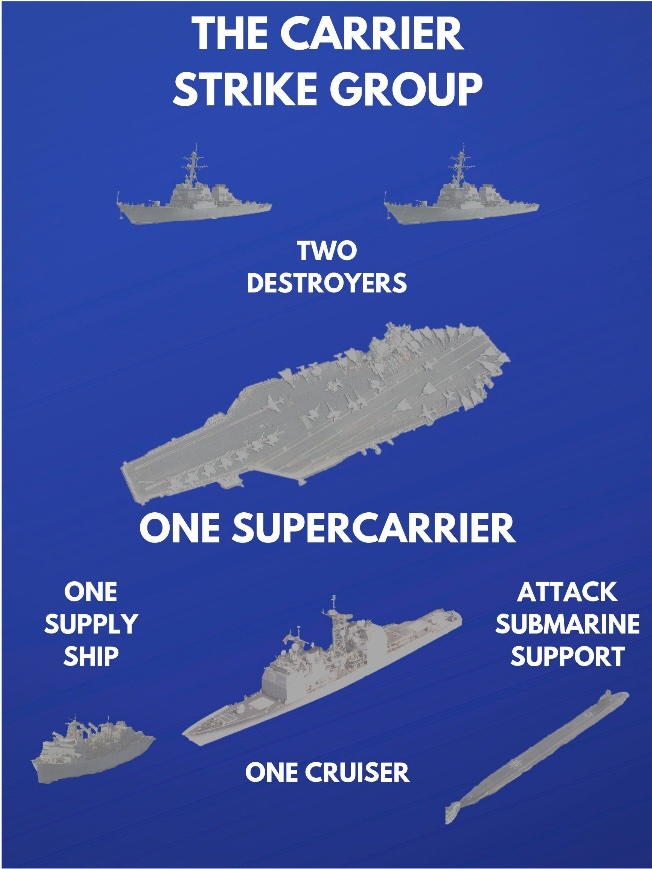
- In addition to ordering the Abraham Lincoln and its CSG to the sea near Iran, he more recently ordered the USS Gerald R Ford to set sail from the Caribbean, where it had been the command center for the kidnapping of Venezuela’s Pres. Maduro, to join it in the Gulf of Oman. (One 2019 study put the cost of operating a carrier at around $6 million/day. The cost has certainly increased a lot since then; and that study wasn’t clear if that figure also includes costs associated with the accompanying naval vessels and aircraft.) The Ford is due to arrive at its new station in another ten days or so.
- He has accelerated the dispatch of various war-fighting capabilities– air-defense and missile defense interceptors, fighter airplanes, recon and refueling planes, etc– to U.S. bases around West Asia, and to Israel. Some of these capabilities have been replacements for items that were used up during the Twelve-Day War. Back in August, the Pentagon sent Congress a request to “re-program” $636.8 million from the budget previously allocated to other tasks, to the replenishment of large quantities of key items of ordnance that Israeli and U.S. forces used during the Twelve-Day War. That included $498.3 mn to replace some 40 THAAD interceptors, and $123 million to replace the GBU-57 bunker buster bombs that Trump ordered used during Midnight Hammer. But it’s likely the current U.S.-Israeli preparations for a war against Iran are not just “replacements”, but also for a further build-up of forces.
- He has continued to issue a series of bombastic threats about the “bad things” that will happen to Iran if it fails to agree to his terms on the nuclear issue. But in his customarily (and intentionally?) mercurial style he has interspersed these threats with some expressions of satisfaction with the course of the diplomacy…
Some preliminary observations
The above recap of the main developments of the past 15 months in the confrontation between the U.S.-Israeli axis and Iran is intended to set the stage for the analysis I plan to undertake in the near future, of the possible future courses and impacts of this conflict. But it is already possible to record the following observations:
#1 Both Israel and this U.S. government have a high degree of sustained commitment to the project of confronting Iran
Israel’s commitment to beating back Iran’s power in West Asia has been clear for many years. The Israeli state apparatus was still working hard on it on October 6, 2023, but then it got “distracted” into dealing with the aftermath of Al-Aqsa Deluge. Even as it was dealing with the situation in Gaza, however, significant numbers of Israeli planners continued working on different aspects of the anti-Iran project. The “pager operation” in Lebanon had almost certainly taken some years to prepare, as had the (non-pager, but probably cellphone-based?) operation to infiltrate so deeply into the entourages of top Iranian leaders that the assassination/decapitation efforts of last June 13 were as successful as they were.
In Washington, Pres. Biden most likely gave solid support throughout his term to all of Israel’s planning for the anti-Iran project. But he didn’t have the same degree of deep commitment to it as what we have seen from Pres. Trump since the very earliest days of his second term.
#2 There have been strong hints that Washington and Tel Aviv seek different goals in/for Iran, but these remain unclear
These apparent divergences have been most clear in recent weeks. At the height of the popular protests in Iran, Israel hosted Reza Pahlavi, the son of the late Shah, and appeared to give quite strong support to his bid to lead the campaign to overthrow the Islamic Republic. But the Israelis also tried to rein the great enthusiasm Trump displayed for a “quick fix” in Tehran, arguing that more time was needed for the military buildup to be sufficient.
For his part, Trump never threw his weight clearly behind Pahlavi or any other identified aspirant to rule in Tehran. And he backpedaled quickly from advocating any speedy change of the regime there, though he continued to make intermittent mention of the benefits of that happening. Meantime, he placed his central focus on winning the kind of “no enrichment” nuclear deal that he explicitly sought; and in a crucial meeting he had with Netanyahu on February 11, in Washington he apparently brushed aside Netanyahu’s pleas that he also include the dismantlement of Iran’s missile capabilities and of its ties with regional allies in the list of demands he was publicly making of Tehran.
One warning: it remains very hard to understand exactly what Trump’s actual goals are in this conflict. The changeability of his public communication is, I think, intentional. He can turn on a dime, with no shame and no explanation. This is just one of many aspects of the deep incoherence of the U.S. command structure during this presidency. It is one that he seems to use with glee. But it makes the reasoned conduct of diplomacy– and possibly also of war-planning– very difficult to achieve.
#3 Iran has not been standing still in its planning for this confrontation
I noted above the success the Iranians had in withstanding and speedily recovering from the very successful decapitation (or near-decapitation) efforts the Mossad undertook on June 13, and the speed and effectivenesss with which they thereafter proved capable of mounting multiple complex attacks against military and scientific targets in Israel. It is thus not surprising to learn that since the June ceasefire, they have continued to use the lessons of that war to further develop their resilience and their capacity to deliver sharp counter-blows to their aggressors, especially Israel. See some references to these steps in this piece I wrote last June about the help China had started giving Iran; or this recent piece in MEMO about the help both China and Russia have given Iran since June.
Iran’s leaders have meantime shown themselves willing to engage in high-level diplomacy with Pres. Trump’s envoys that is publicly articulated through the definition of these demands:
- A readiness to consider different, sometimes fairly imaginative, ways of reaching agreement on the nuclear issue– but only in the context of winning significant sanctions relief;
- No face-to-face meetings, but “proximity talks” only, and those with the facilitation only of the mediator in whom they have the deepest trust– Oman; and
- No discussion of any topic other than the nuclear file.
Iran’s Supreme Leader has meanwhile uttered threats at two different levels that are clearly designed to deter Washington and Tel Aviv from launching an attack. He has stated that the attacks that Iran launched last June against Israel (and to a far smaller and more purely symbolic extent against one U.S. base in Qatar) represented only a “moderate” level of attack, whereas a Iranian response to any future U.S.-Israeli attack would be far harsher. And he has warned the US specifically that in the event of any future attack, American warships would also become Iran’s targets.
#4 U.S.-Iran nuclear talks stumble on, but Iran remains wary of ‘diplomacy as entrapment’
After the second meeting, February 17, in the present round of proximity talks both sides (as noted) expressed a guarded degree of satisfaction that they had gone well and agreed that a third round would be held “in two weeks” at which the Iranians would present more detailed proposals. This situation is extremely similar to the one existing in the two weeks leading up to Israel’s broad attacks of June 13, which was marked by:
- stumbling in the then weeks-long nuclear talks between the U.S. and Iran,
- assurances from both sides that they wanted and intended to continue those talks, interspersed with warnings of dire consequences should the talks fail,
- both sides continuing their military buildup/preparations,
- continued public agitation from Netanyahu that Trump should not be pursuing a “nuclear only” deal with Iran.
On the third of those items, it is now clear that for at least several days before June 13, U.S. military planners must have been coordinating very closely with counterparts in Israel on the specifics of the multi-faceted attacks launched that morning. In those same days, Iran’s leadership teams were, as Iranian commentators have since noted, convening in Tehran to consider their policy toward toward the very challenging negotiations with Washington. Given how many of those same (military, political, nuclear-science) leaders were then targeted in the dawn raids of June 13, Iranian commentators later described the preceding diplomacy as constituting a possible case of “entrapment.” (Other Iranian analysts have said that during the dawn raids, many of the most “dove-ish” members of the country’s policy elite were targeted and killed.)
Another, even clearer case of “diplomacy as entrapment” was that of the Israeli attacks targeting the Hamas leaders who on September 9 were gathered in Doha, Qatar to consider details of the latest ceasefire proposal sent to them by the Trump team. Fortunately for the Hamas negotiators, they were not in the building the Israelis targeted, though the attack did kill the son of lead negotiator Khalil Alhayya along with four other guards, one of whom was a Qatari national. That attack, on the capital city of a country that is a close U.S. ally and hosts the largest U.S. military base in the Gulf region, caused some diplomatic embarrassment to the Trump team which then scrambled to explain how the U.S. military, which was coordinating so closely with Israel all along, either did not know about the plans for the attack or did nothing to prevent it from happening.
#5 Israel’s ability to use “escalation blackmail” against U.S. interests, facilities
Throughout the 28-plus months of the Gaza genocide/crisis I have periodically tracked Israel’s willingness and capability to use “escalation blackmail” against Washington. In simple terms, this is a Mafia-style protection racket. Back in October 2024, I characterized this ploy in these terms:
Hey, Biden, I know you have lots of U.S. interests– and many thousands of U.S. service members– strung out throughout West Asia. Wouldn’t it be a pity if anything happened to them. Which it just might if we were to blow up the Lebanon front… So anyway, you were trying to get us to be more restrained in Gaza. We could consider a deal…
As I noted there, that protection racket continued in various different forms as the months progressed. One currently crucial aspect of this dynamic is the relationship between the U.S.-Israeli alliance’s restraint (or lack of it) regarding Iran and its restraint (or lack of it) regarding Gaza…
It feels important to keep this “protection-racket” potential in mind as we review the crisis that today looms across the whole of West Asia. Several U.S. commentators have already criticized Netanyahu for being willing to “play with” the lives of thousands of U.S. sailors in his quest for dominance over Iran… Keep in mind, too, the fact, referred to in #2 above, that no-one can assume that the interests and goals of Washington and Tel Aviv in this conflict are the same.
#6 Shifts in the regional and global balance of power
Back when Trump pulled the U.S. out of the JCPOA (2018) or when he ordered the killing of Qasem Soleimani (2020), he undertook those peremptorily unilateral acts in a situation in which nearly the whole of West Asia, with the sole exception of Syria, was under the unchallenged sway of U.S. power– and when Washington was confident that all its major allies in the region shared its strong opposition to Iran and would be willing to join in attempts to weaken or overthrow the Islamic Republic there.
Just eight months after Soleimani’s killing, Trump happily announced the conclusion of the Abraham Accords. Bahrain and the UAE joined Israel as the Accords’ founding members, and Trump expressed optimism that Saudi Arabia would not be far behind.
In today’s West Asia, and most especially in the Gulf region, earlier assessments of Washington’s easy supremacy can no longer be taken for granted. One set of key data points here is what transpired during the Twelve-Day War of last June: Saudi Arabia and some or all other GCC states publicly stated their refusal to join any military actions against Iran; Iran was able to fight the combined military might of the United States and Israel to a standstill; and it did so due (to a non-trivial extent) to its military/tech coordination with both Russia and China.
China’s influence in the Gulf region, it is worth noting, extends to fields considerably broader than its military/tech coordination with Iran. Back in March 2023, China’s foreign minister Wang Yi stunned the world when he was able to mediate a breakthrough reconciliation that ended seven years of intense estrangement between the governments of Saudi Arabia and Iran. That breakthrough cemented China’s position as a significant diplomatic/strategic player in the Gulf region– and also allowed it to conclude numerous large-scale economic agreements with GCC countries. And the fact that Wang Yi and his team were able to pursue their multi-pronged regional diplomacy unseen by U.S. surveillance mechanisms until the moment they were ready to unveil it showed that Chinese tech could offer a secure alternative to the previously pervasive U.S.-Israeli systems…
