

Some careful analysts have been declaring a victory for Iran for several days already. Pres. Trump and Poppinjay Pete (Hegseth) have been declaring victory for the U.S. My judgment is closer to that of the “victory for Iran” people– although (1) the war is by no means over yet, and (2) the cost imposed on the peoples of Iran, Lebanon, and Palestine is, and will continue to be, horrendous. Here anyway, are my four current key takeaways, with more explanation below:
- The Islamic Republic of Iran has been holding up well. Its central decisionmaking structure remains in place and it’s been pursuing a smart, long-prepared plan for dealing with this assault.
- The stakes in this contest are global. The IRI deliberately globalized it from the first hours. China has an irreplaceable role in any termination or substantial de-escalation of the conflict. This affects the entire balance of geopolitics.
- The planning, execution, and nature of the Israeli-U.S. assault on Iran have been closely tied to (and grown out of) the Abraham Accords. The failure of the assault should now lead to the end of those accords.
- The choices that GCC leaders make over the coming days will be crucial.
Let’s take these one at a time:
The Islamic Republic of Iran has been holding up well.
The indicators on this are numerous, and becoming more so by the day. The first, very big one, is that the country’s over-arching governance structure clearly remains in place despite the notably broad lethality and scope of the “decapitation” strike that the Israelis undertook on Day 1.
Yes, the strike murdered Supreme Leader Ali Khamene’i and dozens of Iran’s top religious and military/security leaders (and many of his own family members.) But the IRI/IRGC structures had long been prepared for such a decapitation. At the military level, they had a long-prepared plan for devolution of much of the decisionmaking on conduct of the war (known as the ‘Mosaic’ plan.) Parallel plans existed at the religious-leadership, internal security, and popular resilience levels. The IRI did not fall apart into– as the Israelis had clearly hoped– Syria-style or Libya-style internecine chaos. The Americans had, by many reports, been hoping that after the killings of the first big assault on February 28, a much-chastened Tier Two of leaders would quickly become the Delcy Rodriguez’s of Tehran and rush forward to do Trump’s bidding. We will never know, because the Israelis– who by long agreement had been operational control over all parts of the joint “Epstein Fury” plan that pertained to Tehran–also wiped out any other leaders who might have played that role. (Trump himself expressed a little, lightly veiled dissatisfaction over that.)
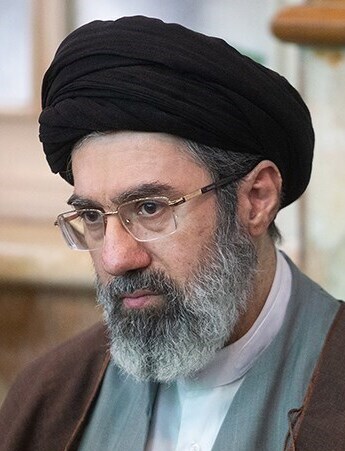
On March 3, the (Islamic) Assembly of Experts in Tehran named Mojtaba Khamenei to be Supreme Leader, succeeding his father. Trump scoffed at the choice, deriding him as a “lightweight” and insisting that he, Trump, “had to be involved in the choice.” The new Supreme Leader has not been seen in public and is thought to have been injured, perhaps badly, during the February 28 assault. On March 12, he issued a defiant statement in which inter alia her said:
The lever of closing the Strait of Hormuz must certainly continue to be used as well. Studies have also been conducted on opening other fronts in which the enemy has little experience and would be highly vulnerable. Their activation will take place, if the wartime situation continues and in accordance with considerations of expediency.
Meantime, at the military level, Iranian units have followed a plan and shown a resiliency that have surprised many longtime observers of Gulf affairs. Regarding the plan, their decision to strike at targets in Israel and at U.S. bases in Jordan and elsewhere in the Arab world was completely expected, and to a great extent planned for (against.) But their decision also to attack targets in U.S.-base-hosting countries on the Arab coast of the Gulf that have gone far beyond the U.S. bases themselves, and to speedily close the Strait of Hormuz, took many decisionmakers and analysts by nearly complete surprise.
That decision was evidently taken in a bid to speedily globalize the scale and impact of the war. And given Iran’s clear ability to control the “lever” (as the Mojtaba statement put it) of Hormuz, it has very evidently succeeded.
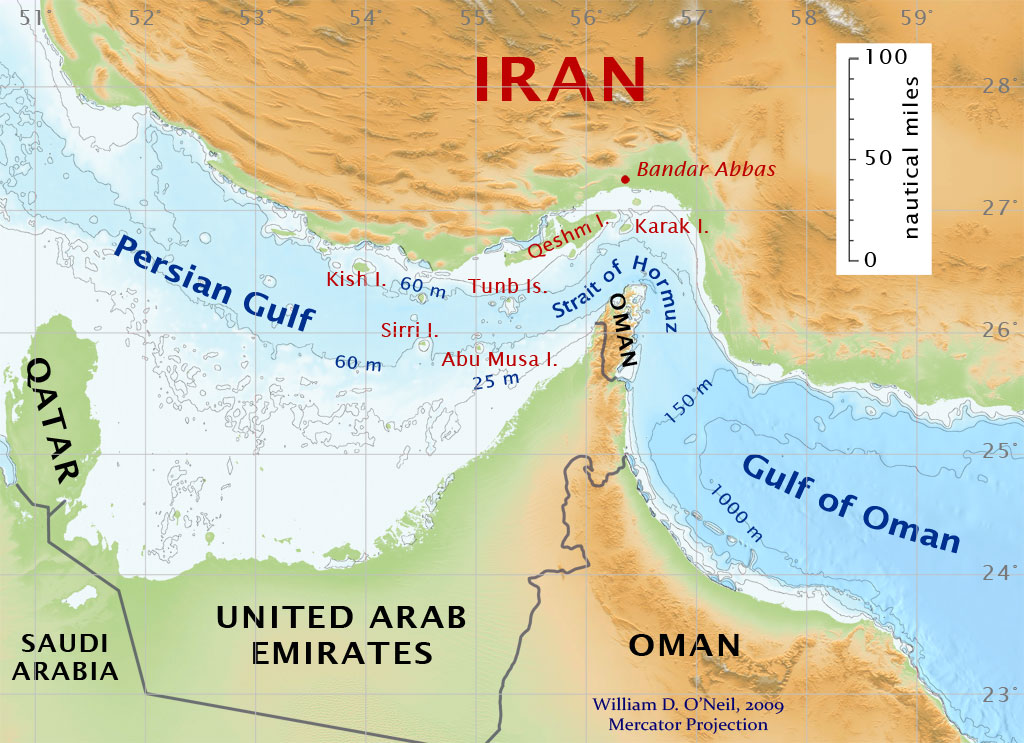
I just want to dwell on Hormuz a moment. It strikes me that Poppinjay Pete may not have looked at any maps of the Strait recently. I found this fairly good one here– click on it to enlarge. As a basically topographical map it shows both the depth of the waterways, and (by color) the elevation of land-masses. That little mountainous northern finger of Oman– Ras Musandam– pokes up into what is otherwise a totally Iran-dominated region. For Very Large Crude Carriers (VLCCs), the draught they require to avoid hitting the bottom is some 15 to 17 metres. That’s why they have to stay in the two narrow lanes, one passing each way through the Strait. And they can’t travel fast because of all the turning required. Then, for any vessel traveling between Hormuz and points West, they still need to sail fairly close to the Iranian shore. So basically, for between 12 and 15 hours minimum, they will be sailing fairly slowly and in easy reach of the many shore-based artillery and missile batteries dug deep into some of those mountains along the Iranian coast.
So the issue is not, as Poppinjay Pete likes to present it, one of the U.S. military being able to “obliterate” all of Iran’s mine-laying vessels. It is much more one of the U.S. and its allies being quite unable to “obliterate” (or, as more normal military people would say, “suppress”) the potential sources of fire all along that portion of the Iranian coast.
In other respects, too, the Iranian war plan has been going generally as well as could be expected. As they did last June, throughout the early days they used fairly large numbers of low-cost and older projectiles against Israel and against U.S. bases throughout the region, as a way of depleting the Israeli and U.S. stocks of interceptors; and in recent days they have been sending much larger and more capable missiles against key targets in Israel.
They have also, since the early days of war, taken effective actions to disable or destroy key radar sites for the U.S. portion of the war effort, as reported in this March 10 piece on the Press TV website. It referenced, for example, this March 2 post on X that showed images of the U.S. base in Bahrain before and after February 28.
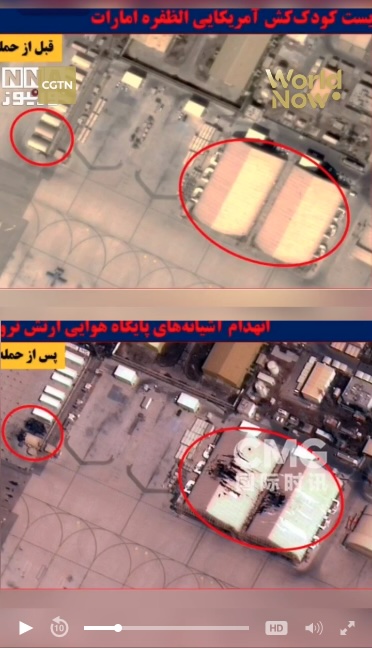
(Very capable, usually Chinese, satellite imaging has been a key asset for Iran’s military in this war. On March 13, China’s state broadcaster CGTN seemed glad to share in some of this glory by airing a short video showing before-and-after satellite images of Iranian attacks on U.S. bases at Al-Udeid in Qatar, Al-Dhafra in the UAE, Prince Sultan Air Base in Saudi Arabia. I also wrote a bit more about China’s satellite capabilities in this recent piece on Substack.)
At the political level, too, the IRI governance system has survived well, in spite of the truly horrendous level of destruction, disruption, and killings that Israel and the U.S. have inflicted on the Iranian people and their institutions. (Up to 3.2 million Iranians already displaced by the attacks, etc.) We have seen not only the apparently smooth succession of Mojtaba Khamene’i in Week 1, but also numerous indications of both (a) the continuing coherence of government leadership and (b) a radical decline– to near-zero– of any of the open anti-government activities that marked much of early January. (We could call this latter phenomenon the “London under the Blitz” effect.)
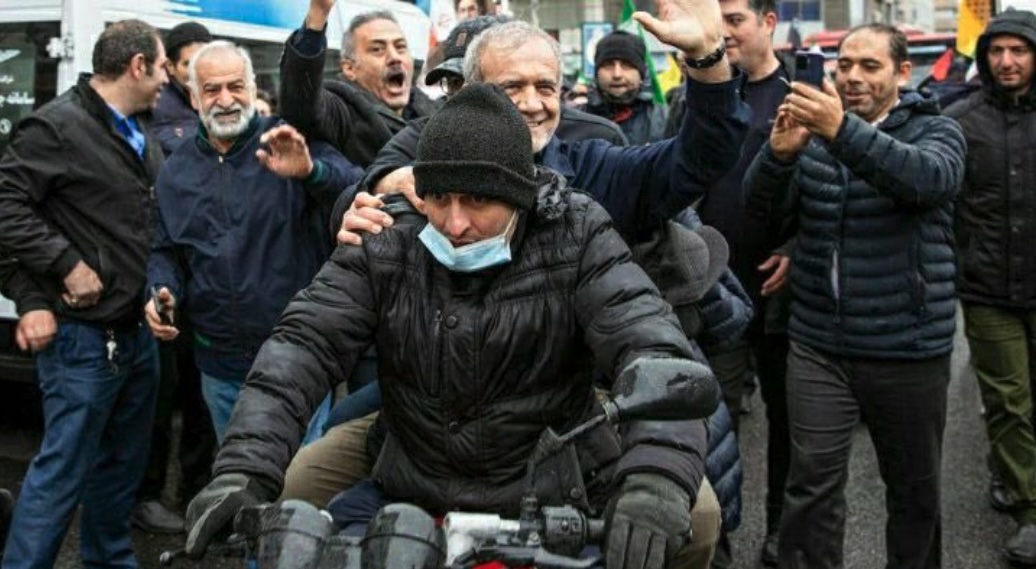
Many government and religious leaders walked easily among the large crowds crowds that gathered to mark “Qods Day” on March 13. Including Pres. Pezeshkian. See him leaving one spot in Tehran on a motorbike, in the banner above. (That, while Poppinjay Pete was deriding Iran’s leaders for “hiding in deep holes, like rats.”)
Bottom line: If the war goals of the Epstein Fury aggressors were to disable or destroy the IRI’s military and to destroy or suborn its system of governance, they have notably failed to date. And there are zero indications that they have any workable plan at all to achieve any of those goals.
The stakes in this contest are truly global
This conflict is not now, and really never has been, “solely” about either the governance of Iran, or even about the balance of power in West Asia more broadly. Because of Iran’s unique geographical position in the world, the governance of Iran is also, inescapably, a matter of global impact.
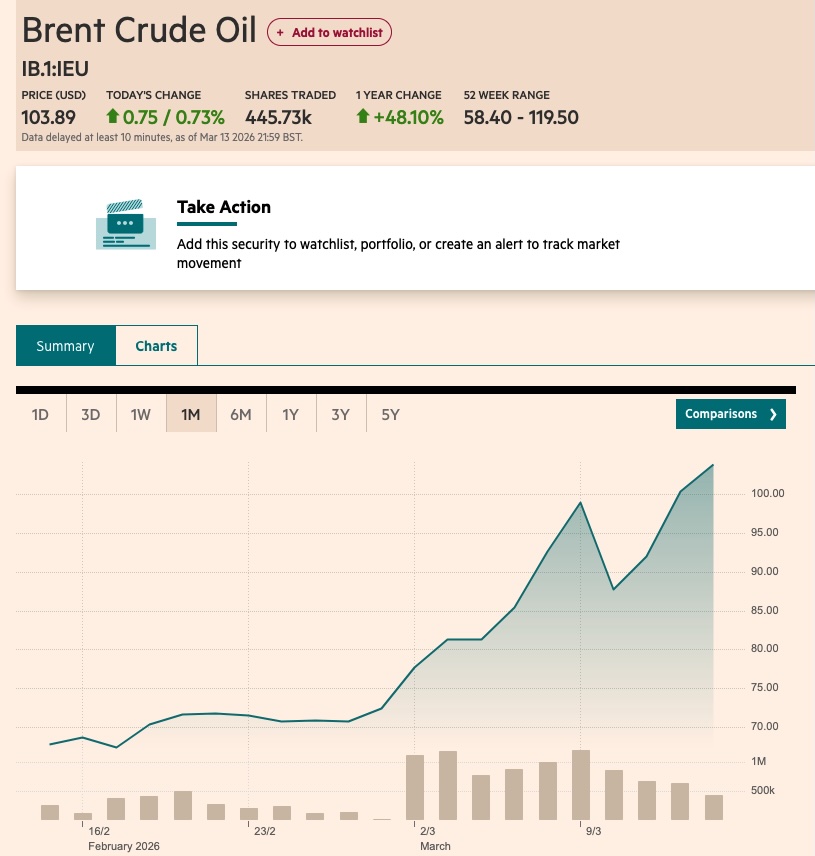
The effects that Iran’s war-times decisions have had on the global economy have already, as we know, been massive and widespread, and they are still unfolding. But this is only one of the dimensions in which this conflict is spurring rapid shifts in the global balance of power. Other key dimensions are the political/military balance between major powers across various key parts of the world, and the relevance and power of the existing body of international institutions, primarily the UN.
At the political/military level, we need to understand that the U.S.-Israeli issue with Iran has never been only, or even mainly, “about” Iran’s nuclear research capabilities. It has also, always, been about the existence of a power at that strategic spot in West Asia that had both the determination and capability to challenge the United States’ longheld desire to continue to exercise the hegemony over the region that it has enjoyed– with no other serious challenger– since the end of the Cold War.
In the 1980s, remember, Washington gave considerable support to the attempts by Saddam Hussein and various Iranian anti-IRI force to fight their way to Tehran in order to topple the IRI. That horrible war lasted eight years and caused an estimated 500,000 deaths.
The Israelis have acted as a close strategic partner of Washington in many parts of West Asia over the past few years (see below.) But for most of the past 45 years, Washington’s closest allies in its constant anti-Iran campaigns have been the Arab states of the Gulf– that is, the territorially substantial Kingdom of Saudi Arabia (KSA) and the string of tiny, hydrocarbon-rich city-states that dot the Gulf’s southern/western shore from Kuwait along to Oman. In 1981, faced with the economic shock spurred by the recent outbreak of the Iran-Iraq War, these six states formed the Gulf Cooperation Council (GCC), which was initially a joint trading bloc though it acquired other dimensions over the year.
Over recent decades, all the GCC states have become extremely wealthy, and some of them– especially KSA, the UAE, and Qatar–have used their wealth to try to exert significant power on the world stage. They have also, all of them, been happy to host U.S. military bases on their shores, judging that the presence of those bases would help protect their vital assets. (Iran’s bold move, from the first days of the current war, was to prove that calculation wrong…)
Relations between the GCC states and Iran have often been fraught, though there have also been numerous areas of cooperation. Relations among the GCC states themselves have also often been fraught. And for their part, the KSA and UAE have for many years sustained vicious attacks against their other big neighbor on the Arabian Peninsula, Yemen.
At the level of global relations, the KSA had enjoyed close ties with Washington since the 1930s, while other GCC members historically had much closer ties with London. Then in 1967, British PM Harold Wilson decided to withdraw all UK military forces from “East of Suez“. Over the years that followed the small Arab states of the Gulf increasingly replaced the military ties they had long had with London, with new ties to Washington. In the wake of the Wilson decision, the British also rapidly gave full political “independence” to all the small, often bickering polities that until then had been ruled by a “truce” of which London was the guarantor. London even managed to get seven of those small princedoms to federate into a new entity named the United Arab Emirates, headquartered in Abu Dhabi.
Bottom line: for more than a whole century now the southern coast of the Gulf was essentially a playground for Western powers. And so– until 1979– was the Gulf’s north coast. Then that year the Shah was toppled, and the firmly anti-U.S., anti-Israel structure of the IRI was able to consolidate its rule over a country that was considerably larger, more populous, and more economically developed than any of the GCC states. (Iraq, at the head of the Gulf, was also an increasingly capable state until it got into the cross-hairs of the Zionists in Washington with Saddam Hussein’s decision to invade Kuwait in 1990…)
The GCC states continued for a long time after 1967 to conduct most of their international economic activities with the core powers of the “West”: the USA, the UK, and Europe. But over the decades China’s power in the global economy grew, and so did its ties with the GCC members (and also, for many years with Israel.) But China also, throughout that period continued to cultivate ties with Iran, which is a crucial source for its oil imports.
Fast-forward to modern time. In March 2023, Chinese Foreign Minister Wang Yi publicly announced that he had effected a reconciliation in the long-torn relations between KSA and Iran. That move signaled that Washington’s long-pursued campaign to strangle Iran through sanctions was now fraying badly. (It also indicated that Beijing had ways of communicating with leaders in the region that were not vulnerable to U.S. spying/detection. Joe Biden’s Washington was taken completely by surprise by the announcement.)
During the 12-day-long assault that Israel and the U.S. undertook against Iran last June, some of Beijing’s other capabilities in the region also started to become evident. Though the aggressors in that war were able to hack into many of Tehran’s GPS-based means of communication, they were not able to block or scramble the missile-guidance systems and other means of communication that the Iranians used, which were reliant on China’s BeiDou satellite system. Moreover, just three weeks before Tel Aviv launched that war, a new rail connection between western China and Tehran was inaugurated. A lengthy freight train “carrying electronics and other goods” was the first to arrive in Tehran.
In the present war, China’s influence across the whole Gulf region is even more evident. As I noted here a few days ago, FM Wang had been intensively working the phones with many of Iran’s key neighbors, including Kuwait, Bahrain, Pakistan, and Qatar, and a top Chinese envoy was being sent to the Gulf region to undertake follow-up. Various news reports have said that China may be close to winning agreement from Tehran that it may allow Chinese-flagged vessels, and only them, to transit the Gulf.
An intriguing report in the FT yesterday said that France, Italy, and some other European powers may be trying to negotiate similar deals for their ships. Be that as it may, the fact that China has already been able to exert as much influence on the course of this war as it already has– and to do so, mainly during a period that has seen China’s annual “Spring Festival” as well as key leadership meetings– means that Beijing’s decisions and influence will be a key factor determining the future course, length, and outcome of this present conflict.
The extent of this influence, in such a vital part of today’s world, will have considerable impact on the broader balance between today’s global powers. Let us hope it is wielded for good– to bring the war to an end as speedily and sustainedly as possible, and in a way that shores up worldwide respect for the norms and institutions of international relations that Washington and Israel have shredded so disastrously over the recent decade.
The planning, execution, and nature of the Israeli-U.S. assault on Iran have been closely tied to (and grown out of) the Abraham Accords
It is true that at the level of global affairs, the precise minutiae of how and when Israel and the U.S. undertook the planning and execution of this war may seem picayune. But I nonetheless believe it is important to understand them.
I have noted in various places that the present, Epstein Fury, stage of the Israeli-U.S. assault on Iran was long in the planning– including that, for example, the Israelis were clearly undertaking intensive preps for some kind of major assault against key Iran ally Hizbullah, back on October 6, 2023, when they got rudely interrupted by Hamas’s launch of its big Operation Aqsa Deluge. Now, in an important piece of reporting in the FT, their Israel correspondent Neri Zilber has given us considerably more detail about the long period of planning for the current war and the context in which it was conducted.
The whole article is well worth reading. But this, in particular, caught my eye:
Several current and former US and Israeli security officials said the foundation for the offensive could be traced back to Donald Trump’s first term as president and the Abraham Accords normalisation deals brokered in 2020 between Israel and four Arab states.
A year later Israel transitioned to US Central Command, the military body responsible for operations across the Middle East, from the European combat command.
“This was a crucial component,” said Oded Basyuk, a retired Israeli general who led IDF operations during last year’s 12-day war against Iran, which the US briefly joined. “This [current campaign] couldn’t have happened without us joining… Centcom.”
This is a crucial insight. For those unfamiliar with the way the U.S. military is organized, it consists of four distinct armed service “branches”, and then ten or twelve cross-cutting military “commands” that may contain units from all the different branches. These commands are constituted along functional or geographic lines. The most relevant command in the current context is Centcom, which was established in 1983 with its “Area of Responsibility” being essentially all of West Asia, though it has always been headquartered in Tampa, Florida. Centcom’s mission was to coordinate war planning for and with all the countries in its AOR– except, for many decades, Israel. Such planning as the U.S. military conducted jointly with Israel was conducted separately, through its European Command, Eucom, because– as we all knew– the key Arab states that coordinated with Centcom during those years would have objected to doing that with Israeli planners also in the room.
It’s not clear how deeply Egypt and Jordan would ever have objected to that. But the GCC states that were key to Centcom’s planning still did… Until two of them, the UAE and Bahrain, agreed to become founder members of the Abraham Accords; and the Saudis, Qataris, Kuwaitis, and Omanis also clearly dropped their objections to doing military planning jointly with Israel at that time.
So there we are. The whole concept and execution of Epstein Fury were joined at the hip to the Abraham Accords. If Epstein Fury is to be decisively blocked, then surely the Abraham Accords need to be, too.
Other relevant implications of what Zilber was reporting were that the Centcom-based coordination between all those Arab militaries and Israel continued uninterrupted through the four years of the Biden administration… And also that it has continued uninterrupted until now, even throughout and despite all the ghastly genocidal actions the Israelis have undertaken in Gaza and throughout all the other many illegal and destructive actions it has taken against numerous other targets in the region.
(And yes, that includes the attack the Israelis undertook against a civilian villa in Doha, Qatar, last September, when they were trying to kill all of Hamas’s negotiating team there. The Qatari leaders declared themselves miffed by that action. But clearly they did nothing to cut back their coordination with Centcom or with Centcom’s other “valued” partner, Israel.)
The choices that GCC leaders make over the coming days will be crucial
I don’t have a lot to say on this topic. Since the beginning of this war I have been actively pushing for the GCC leaders to push the U.S. military bases out of their countries and for all of the littoral states of the Gulf to openly work to establish the Gulf as a Zone of Peace. This is, I believe, a crucial goal for peace lovers worldwide and it is one that will certainly help re-establish something like the rule of international law throughout the whole of West Asia, and even further afield.
The stakes in all of this, for all of humanity, are high indeed.
But what are the chances of this happening? Many factors, both in the global economy and on the “battlefields” of the Gulf region and Israel, are pushing in this direction. But an important role will be played by the decisions that the leaders of the Arab states of the Gulf will take over the days and weeks ahead. Until recently I wouldn’t have placed many bets on them making any decisions that might openly challenge the desires of their U.S. and Israelis handlers, oops, sorry, partners. But maybe the events of the past two weeks has been starting to change their minds?
There have been several indications that this might be happening. And I certainly hope that able diplomacy from China and all other relevant and interested parties might push in the direction of something like my proposal of a Zone of Peace.
The most significant indicator I have seen that a change-of-heart could be possible in Gulf countries is an opinion piece that a scholar called Hussein Ibish published in Haaretz on March 12. It’s titled “Gulf States Now View Israel as an Agent of Chaos Equal to Iran.” The whole if it worth reading– not least because Hussein Ibish, son of a far more distinguished father, the Lebanese/Syrian Islamic scholar Yusef Ibish, has distinguished himself for some years as a stalwart and often feisty opponent of Iran. He is, by the way, a Senior Resident Scholar at a generously GCC-funded outfit here in Washington called the Arab Gulf States Institute in Washington.
He writes this:
Since the Gaza war began, however, many Gulf Arab perspectives on Israel’s strategic character have shifted radically. Now Israel is widely viewed as being a major source of insecurity and instability in the Middle East, at least on a par with Tehran. There is the genocidal Gaza war, creeping annexation in the West Bank, hegemony and expansion in Lebanon, territorial land grabs in Syria and opposition to a united and stable regime led from Damascus in that country, plus these repeated and highly destabilizing wars with Iran.
Many Israelis may have assumed that privately Gulf leaders were quietly and smugly satisfied that someone else was bringing Tehran to its knees. This is not the case.
And later this:
… during the last few years, all of the Gulf countries have calculated that they urgently need to turn their energies inward and spend their resources on making the complicated economic transition to a viable post-hydrocarbon infrastructure. The last thing they want or need is more wars surrounding them to drain their attention, resources and finances. Yet that is exactly what is happening.
Therefore, while their profoundly suspicious assessment of Iranian intentions has not changed – although their sense is that Tehran’s ability to project power into the western and southern Middle East has been greatly attenuated by the Turkish-engineered downfall of the Assad dictatorship in Syria – they are not enthusiastic about this war but instead feel deeply threatened by it.
When the Gulf Arab countries look at the unfolding conflict, they see little other than threats and challenges from friend and foe alike. Iran has earned and rightly received most of the outrage. But there is dismay at Washington and deep and growing suspicion of Israel’s regional agenda.
Thus, not quite yet an appeal to the GCC states to support the call for a Zone of Peace. But coming from Hussein Ibish, still something worth noting…
